Table of Contents
Best Backpacking Gear for Beginners
Backpacking looks simple until you’re three miles in, your shoulders ache, your pack feels like it’s full of bricks, and you realize you packed the wrong stuff.
I’ve been there. My first overnight trip? I brought way too much gear, didn’t get enough sleep, and struggled to figure out the stove in the dark. That trip taught me something important: beginner backpacking gear isn’t about buying everything—it’s about buying the right things.
This guide is for beginners hiking US trails—national parks, state forests, and weekend loops—who want gear that works without draining their bank account or their energy.
No hype. Just stuff that earns its place in your pack.
What Beginner Backpackers Actually Need (Not What YouTube Says)
Before we talk products, let’s reset expectations.
As a beginner, your goals are simple:
- Stay comfortable enough to enjoy the hike
- Stay warm and dry overnight
- Carry a weight you can manage for miles
You do not need:
- Ultralight $700 tents
- Expedition-grade backpacks
- Gear made for Everest
You need reliable, forgiving, beginner-friendly backpacking gear.
🧭 Backpack (Gear for Beginners-Important Decision)
A bad backpack ruins trips fast. Shoulder pain. Hot spots. Constant adjustments.
What to Look For
- Capacity: 50–65 liters (sweet spot for beginners)
- Adjustable torso length
- Padded hip belt (non-negotiable)
Beginner-Friendly Backpack Option
Osprey Atmos AG 65
Use case:
Carries heavier beginner loads comfortably without digging into the shoulders.
Trade-off:
Slightly heavier than ultralight packs.
Who it’s for / not for:
Great for beginners learning packing. Not ideal if you’re chasing ultralight stats.
⛺ Tent: Simple, Forgiving, Weather-Ready
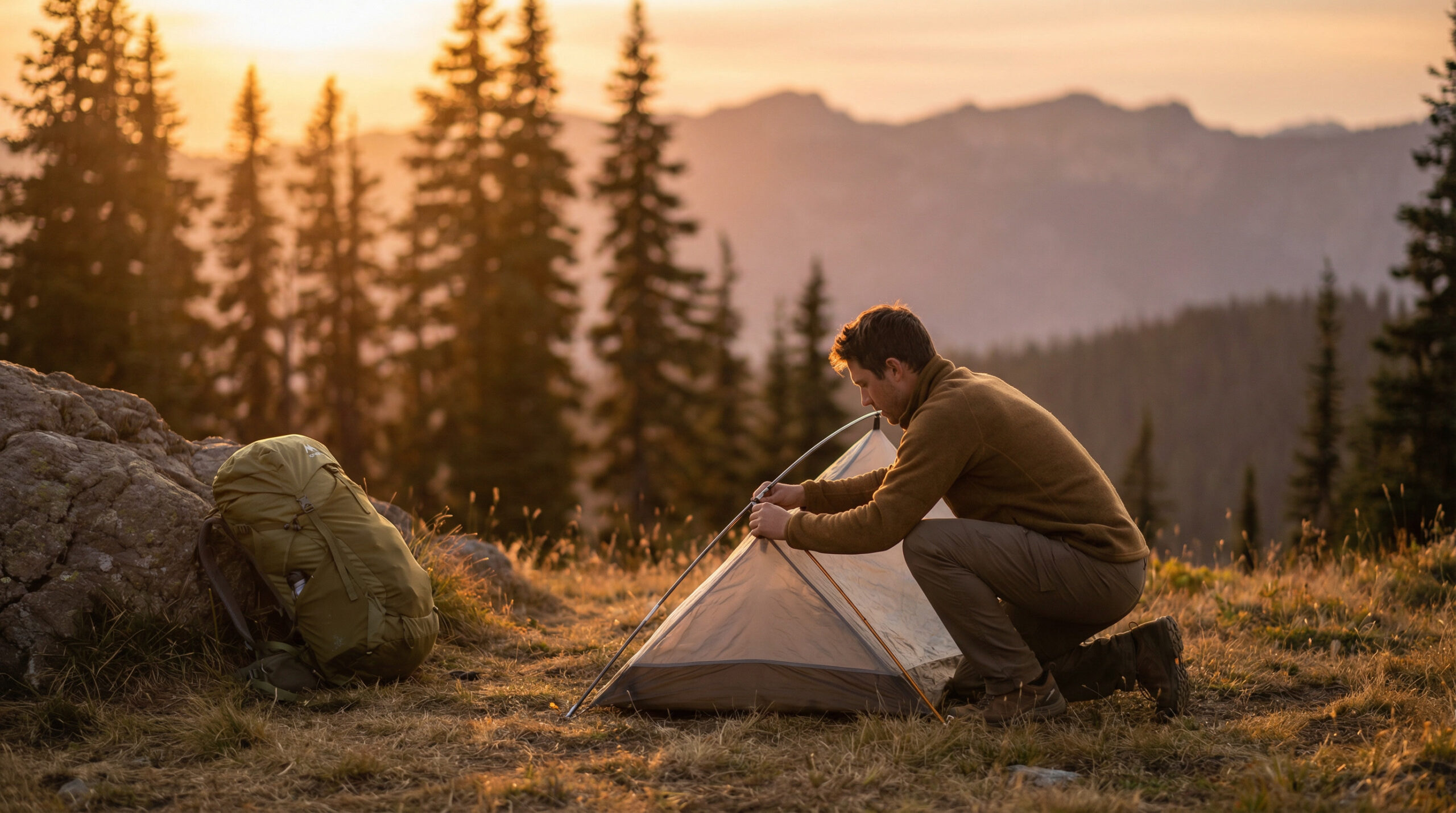
You want a tent that goes up fast, handles rain, and doesn’t make you swear.
What Beginners Should Prioritize
- Freestanding design
- Two doors (trust me)
- Under 5 lbs total weight
Solid Beginner Tent
Big Agnes Copper Spur HV UL2
Use case:
Comfortable shelter for one or two people on US trails.
Trade-off:
Higher price than budget tents.
Who it’s for / not for:
Perfect for beginners who want quality. Overkill for casual car camping.
🛏️ Sleeping System (Don’t Cheap Out Here)
Cold nights kill morale fast.
Sleeping Bag (3-Season Sweet Spot)
Look for:
- 20°F rating
- Synthetic insulation (easier for beginners)
REI Co-op Trailbreak 20
Use case:
Keeps beginners warm without fuss.
Trade-off:
Bulkier than down bags.
Who it’s for / not for:
Great for first trips. Not ideal for ultralight hikers.
Sleeping Pad (More Important Than the Bag)
Therm-a-Rest Z Lite SOL
Use case:
Insulation and comfort on rocky ground.
Trade-off:
Bulky outside the pack.
Who it’s for / not for:
Ideal for beginners. Not for people who want plush comfort.
🍳 Cooking Gear: Keep It Simple
You don’t need a kitchen. You need hot food.
Beginner Stove
MSR PocketRocket 2
Use case:
Fast boils for coffee, ramen, and freeze-dried meals.
Trade-off:
Not great in high wind without a shield.
Who it’s for / not for:
Perfect for beginners. Not for gourmet camp cooking.
💧 Water: Filter, Don’t Carry Everything
Sawyer Squeeze Water Filter
Use case:
Safe drinking water from streams.
Trade-off:
Slow if filtering for groups.
Who it’s for / not for:
Ideal for solo beginners. Less ideal for large groups.
👕 Clothing: Fewer Pieces, Smarter Choices
Beginner mistake: packing too many clothes.
What Works
- Merino wool base layer
- Lightweight puffy jacket
- Rain shell
Cotton? Leave it at home.
🎒 The “Stuff Beginners Forget” List
This is the stuff that saves trips:
- Headlamp (hands-free at night)
- Blister kit (moleskin works)
- Trash bag (multi-use hero)
- Earplugs (nature is loud)
What Most People Miss (And Regret Later)
Pack weight matters more than brand names.
If your pack weighs over 35 lbs fully loaded, your trip won’t be fun. Beginners should aim lighter—even if that means leaving “just in case” items behind.
A Short Personal Story (Why This Matters)
On my second backpacking trip, I carried a cheap pack with no hip support. Five miles in, my shoulders were screaming. I almost turned back.
Switched packs before the next trip—and it felt like someone flipped a switch. Same trail. Totally different experience.
Gear doesn’t make you tough. The right gear makes you enjoy going back.
Ethical CTA
If you’re starting, don’t rush to buy everything at once. Pick one trip. Buy gear that solves that trip’s problems. Upgrade later when your style becomes clear.
Backpacking is learned one mile at a time.
7) FAQs — Beginner Backpacking (US Focus)
1. What is the best backpacking gear for beginners in the USA?
Beginner-friendly, durable gear focused on comfort, not ultralight extremes.
2. How much should a beginner spend on backpacking gear?
$600–$1,000 is realistic for a complete, reliable setup.
3. Is backpacking gear different from hiking gear?
Yes—backpacking gear prioritizes overnight comfort and weight.
4. What backpack size is best for beginners?
50–65 liters works for most US weekend trips.
5. Do beginners need an ultralight tent?
No. Lightweight is good, but durability matters more early on.
6. What sleeping bag rating is best for beginners?
20°F covers most 3-season US conditions.
7. Is synthetic or down better for beginners?
Synthetic is easier to manage and cheaper.
8. How heavy should a beginner’s backpack be?
Ideally under 30–35 lbs fully loaded.
9. Can beginners backpack solo?
Yes, with conservative routes and proper planning.
10. What cooking gear is best for beginner backpackers?
Simple canister stoves with boil-only meals.
11. Do beginners need trekking poles?
Helpful, but optional.
12. How do beginners stay warm at night?
Good sleeping pad + proper bag + dry clothes.
13. What mistakes do beginner backpackers make?
Overpacking, poor footwear, and ignoring the weather.
14. Is backpacking safe for beginners?
Yes, with preparation and realistic routes.
15. How many miles should beginners hike per day?
5–8 miles is an ideal starting range.
Pro-Tip
Refresh quarterly.
🔗 Related Articles
- Ultimate Hiking Gear Guide (Beginner to Pro 2026) Hiking Gear
- Best Hydration Gear for Overnight Hikes: Beginner Guide 2026 Hiking Gear
- Smart Ultralight Backpacking Gear Checklist: 9 Tips for 2026 Buying Guides
- Best Budget Camping Gear Under $50 Accessories
- Best Hydration Gear for Overnight Hikes Near Me (Real Hiking Gear
- Survival Gear Beginners: Best Survival Gear for Beginners: 9 Picks for 2026 Buying Guides