Table of Contents
This post contains Amazon affiliate links — if you buy through them, I earn a small commission at no extra cost to you.
Introduction
Picture this: 5:47 AM, somewhere in the Eastern Sierra, frost on the tent fly, a butane stove hissing to life. The coffee you make in the next ten minutes will either launch the best hiking day of your year or drag you through it. That’s not a small thing. And yet most people grab whatever lightweight drip packet they found at REI checkout and call it good enough.
It doesn’t have to be that way. The best camping coffee makers today are purpose-built for the outdoors — light, durable, and capable of producing a cup that would hold its own against your corner café. The hard part is sorting through dozens of options when you’re standing in a gear shop or scrolling at midnight. Different trip types, group sizes, stove setups, and altitude ranges all demand different solutions.
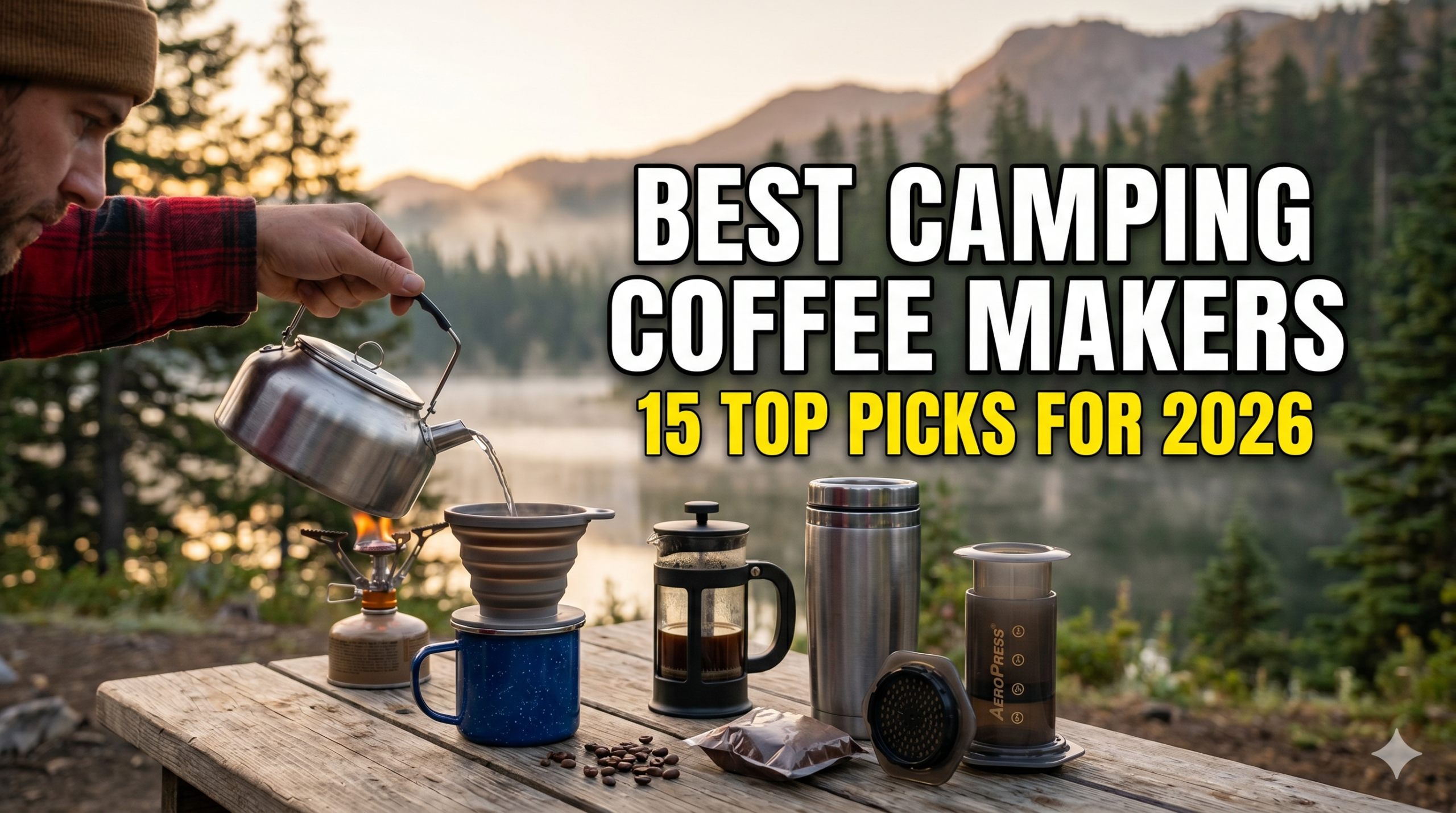
This guide covers 15 camping coffee makers tested across backpacking trips, car camping weekends, desert overlanding routes, and RV hookups. You’ll find a pick for every scenario, a full buying guide, an altitude-adjusted brewing section that most competitors skip entirely, and a Leave No Trace note on what to do with grounds in the backcountry. Let’s get into it.
Table of Contents
- Camping Coffee: What to Know Before You Buy
- The 15 Best Camping Coffee Makers for 2026
- Side-by-Side Comparison Table
- Buying Guide: What Actually Matters
- Best Pick for Your Camping Style
- Common Mistakes to Avoid
- Care & Maintenance Tips
- Frequently Asked Questions
- Final Verdict
Camping Coffee: What to Know Before You Buy
The Six Brewing Methods — Plain English
Every camp coffee maker falls into one of six categories. Knowing which method suits your style eliminates 80% of the confusion upfront.
- Percolator: Water cycles up through a tube, over grounds, and back down repeatedly over heat. Produces bold, full-bodied coffee. Best for groups and campfire use. Requires coarser grind. Zero filter waste.
- French Press: Grounds steep in hot water for 4 minutes, then a plunger pushes them to the bottom. Rich, full-bodied result. Requires medium-coarse grind. No filters needed. Brew for 2–6 people easily.
- Pour Over: You pour hot water slowly over grounds in a filter. Clean, bright cup. Requires medium grind and patience. Lightest option (some weigh under 1 oz).
- AeroPress: Forced extraction using a plunger — a hybrid between espresso and pour-over. Fast (under 2 minutes), versatile, and forgiving of water temp variation. Handles fine-to-medium grind.
- Moka Pot / Stovetop Espresso: Pressurized steam forces water up through fine grounds into an upper chamber. Produces espresso-strength brew without electricity. Requires fine grind and a stove.
- Portable Espresso (Hand Pump): Units like the WACACO Nanopresso generate real pressure (up to 18 bar) for a true espresso shot. Heaviest and most involved, but the only backcountry option for genuine espresso.
Key Specs That Actually Affect Your Morning
Weight and packed size matter most on multi-day backpacking trips. A percolator that weighs 2 lbs is dead weight on a 4-day alpine route. For car camping, it’s irrelevant.
Capacity is the most underestimated spec. Brewing four 6-oz servings for a group of four sounds like it should take one brew cycle with a 9-cup percolator. In practice, you lose liquid to absorption in the grounds — plan for about 25% less output than advertised capacity.
Heat source compatibility separates gear that’s actually field-ready from gear that looks good on a shelf. Confirm before you buy: does it work on a canister stove? Campfire? Induction? Propane burner? Most stainless steel options are universal. Aluminum is not compatible with induction. Glass is campfire-incompatible.
Cleanup complexity multiplies at camp. A system that requires 15 rinse steps at 6 AM when you’re breaking down camp will get abandoned by trip two. Favor designs with fewer parts and grounds that eject cleanly.
The 15 Best Camping Coffee Makers for 2026
1. AeroPress Go Travel Coffee Press — Best Overall
The AeroPress Go has become the default answer for “what coffee maker should I bring camping?” for one simple reason: it’s the most forgiving brewer ever made. Grind a little coarse, water a little hot, forgot the timer — the result is still good coffee. That matters at 6 AM after a cold night in a tent.
The Go version (as opposed to the original AeroPress) includes a travel mug that the whole system nests into, trimming the footprint considerably. At 11.5 oz including the mug, it’s one of the lightest full-featured brewers on this list. It brews up to about 8 oz per cycle — one large mug, or two modest ones. Clean-up takes about 20 seconds: press the puck out, rinse the chamber.
Who this is for: Solo campers, couples, and anyone who values coffee quality above all else. Not for: Groups larger than 3 (it simply doesn’t scale) or anyone who wants zero moving parts.
Real-world note: At 9,000 feet in the Colorado Rockies, where water boils around 194°F, the AeroPress outperforms pour-overs because its pressure compensates for the lower brew temperature — you still get full extraction.
| Spec | Detail |
|---|---|
| Weight | 11.5 oz (with mug) |
| Capacity | 8 oz per cycle |
| Brew Time | ~2 minutes |
| Heat Source | Any (pre-heated water) |
| Filter Type | Paper or reusable metal |
| Best Grind | Fine to medium-fine |
- Pros: Extremely forgiving of water temp variation; fastest brew-to-cup of any method; compact nesting design with travel mug included; makes espresso-style concentrate or regular coffee
- Cons: Paper filters create waste (bring a metal reusable filter to eliminate this); single-serve requires multiple cycles for groups; plastic components (BPA-free, but some prefer all-metal)
2. GSI Outdoors Ultralight Java Drip — Best for Ultralight Backpackers
This thing weighs 0.4 oz. Less than a protein bar. It’s a pour-over filter holder with three fold-out legs that clip onto your camp mug — that’s the entire product. And yet it brews a genuinely clean, bright cup if you have the patience to pour slowly.
The GSI Ultralight Java Drip is not for people who want coffee fast. Pour-over takes 3–5 minutes of active attention. But for ultralight backpackers counting every gram, there is simply nothing lighter that produces this quality of cup. The handkerchief-sized filter rinses out in seconds and packs flat in any pocket.
Who this is for: Thru-hikers, ultralight backpackers, minimalists. Not for: Groups, cold mornings when you need speed, or anyone who finds pour-over technique fussy.
| Spec | Detail |
|---|---|
| Weight | 0.4 oz |
| Capacity | 1 cup per cycle |
| Brew Time | 3–5 minutes |
| Heat Source | Any (pre-heated water) |
| Filter Type | Reusable cloth |
| Best Grind | Medium |
- Pros: Essentially weightless; reusable filter means zero pack-out waste; clean, bright flavor profile; clips to any mug
- Cons: Requires slow, controlled pouring or the filter tips; single-cup only; pour-over is a learned skill; less forgiving at altitude
3. COLETTI Bozeman Camping Percolator — Best for Groups
All-stainless-steel construction, 9-cup capacity, campfire and stove compatible — the COLETTI Bozeman is exactly what a percolator should be. It’s heavier than other options at around 1.5 lbs, but when you’re feeding six people coffee before a full day of hiking, weight becomes someone else’s problem (that’s what car camping is for).
The Bozeman comes with a glass percolation knob so you can actually watch the coffee cycle. It brews in 7–10 minutes on medium heat. Unlike cheaper aluminum percolators, the stainless steel won’t impart metallic flavor into your coffee — a real problem with some budget models after repeated use at high heat.
Who this is for: Car camping families, group campsites, anyone who wants a big pot of coffee over a campfire. Not for: Backpacking (too heavy), or coffee snobs expecting pour-over clarity.
| Spec | Detail |
|---|---|
| Weight | ~1.5 lbs |
| Capacity | 9 cups |
| Brew Time | 7–10 minutes |
| Heat Source | Campfire, gas stove, propane |
| Filter Type | Stainless basket (no paper needed) |
| Best Grind | Coarse |
- Pros: Feeds large groups in one brew cycle; all-stainless means no metallic off-flavor; works directly on campfire; visual percolation knob; no filters to buy or pack out
- Cons: Percolated coffee is bolder/more bitter than pour-over or AeroPress styles; too heavy for backpacking; requires monitoring to avoid over-extraction
4. Bialetti Moka Express — Best Stovetop Espresso
Over 90 years old and still in production because nothing has improved on the design. The Bialetti Moka Express forces pressurized steam through fine-ground coffee, filling the upper chamber with rich, concentrated brew that splits the difference between espresso and drip. It’s not technically espresso — it doesn’t reach true espresso pressure — but it’s the strongest camp coffee you’ll make outside of a hand-pump unit.
The aluminum body heats fast and is bombproof in a pack. The only fragile part is the rubber gasket, which can dry out over time — carry a spare if you’re planning a multi-week trip. Available in sizes from 1-cup to 12-cup; the 3-cup version (about 10 oz) is the sweet spot for camping.
Who this is for: Espresso drinkers, anyone who wants strong coffee with minimal gear, solo to small group campers with a stove. Not for: Campfire use (the bottom can scorch), backpackers counting grams (the 3-cup weighs about 12 oz).
| Spec | Detail |
|---|---|
| Weight | ~12 oz (3-cup) |
| Capacity | 3–12 cups (size-dependent) |
| Brew Time | 4–7 minutes on stove |
| Heat Source | Gas stove (not campfire direct flame) |
| Filter Type | Metal basket (no paper needed) |
| Best Grind | Fine (finer than drip, coarser than espresso) |
- Pros: Nearly indestructible aluminum; produces genuinely strong, espresso-strength coffee; no filters or electricity; nine-decade proven design; compact when packed
- Cons: Requires a stove with a stable flame (not campfire); aluminum not induction-compatible; gasket requires occasional replacement; not the fastest cleanup
5. GSI Outdoors Java Press — Best French Press for Camp
A French press wrapped in a rugged canvas sleeve with a polypropylene body that’s been bouncing around gear boxes for years without cracking. The GSI Java Press holds about 30 oz — enough for three to four solid cups — and maintains temperature decently well thanks to the insulated sleeve.
If you’ve ever used a French press at home, the transition to camp is instant. Add coarse grounds, add boiling water, wait 4 minutes, press slowly, pour. The Java Press produces richer body than pour-over but with more sediment than the AeroPress. That said, using a slightly coarser grind than you think you need eliminates most of the muddy-cup complaints.
Who this is for: French press fans who want a field-ready version of their home routine, small groups. Not for: Ultralight trips (30 oz empty weight), or anyone who hates grounds in their cup.
| Spec | Detail |
|---|---|
| Weight | ~15 oz |
| Capacity | 30 oz (~4 cups) |
| Brew Time | 4–5 minutes steep |
| Heat Source | Any (pre-heated water) |
| Filter Type | Stainless plunger (no paper) |
| Best Grind | Medium-coarse |
- Pros: No filter waste; familiar French press ritual; insulated canvas sleeve adds durability and some temp retention; enough capacity for small groups; rugged polypropylene body
- Cons: Sediment in the cup is unavoidable (use coarser grind to minimize); not the lightest option; not truly insulated like a vacuum-sealed French press
6. WACACO Nanopresso — Best Portable Espresso Maker
The Nanopresso is the real deal. It generates up to 18 bar of pressure through hand-pumping, which is enough to pull a legitimate 30 mL espresso shot with proper crema. This is not AeroPress “espresso-style” — this is actual espresso, just without the countertop machine. It weighs 11.6 oz, fits in a jacket pocket, and works anywhere you can heat water to around 185°F.
The catch is complexity. The Nanopresso requires a fine, consistent grind, precise dosing (about 8 grams per shot), and enough patience to pump steadily for about a minute. With practice, it becomes second nature. Without it, the first few attempts produce a thin, under-extracted shot. Bring a hand grinder with a fine setting.
Who this is for: Dedicated espresso drinkers who refuse to give up their morning ritual at any campsite. Not for: Beginners, people who need speed, or anyone without access to a consistent fine grind.
| Spec | Detail |
|---|---|
| Weight | 11.6 oz |
| Capacity | 1 espresso shot per cycle |
| Brew Time | ~1 minute of pumping |
| Heat Source | Any (pre-heated water) |
| Filter Type | Metal basket (no paper) |
| Best Grind | Fine (espresso grind) |
- Pros: True 18-bar espresso pressure; genuine crema; no electricity needed; compact and pocketable; NS adapter available for Nespresso pods
- Cons: Steep learning curve; requires precise grind; single-shot only per cycle; cleanup more involved than most camp brewers
7. Stanley Adventure All-In-One French Press — Best for Solo Car Camping
The Stanley All-In-One integrates the brew vessel and the drinking vessel into one insulated 16 oz unit — brew your French press, seal the lid, and drink from the same container 4 hours later and it’s still hot. For solo car campers or a pair who each want their own vessel, this is elegant design. The stainless steel body can take a full drop onto pavement with zero drama, as proven by too many campsite fumbles to count.
| Spec | Detail |
|---|---|
| Weight | ~1 lb |
| Capacity | 16 oz |
| Brew Time | 4–5 minutes |
| Heat Source | Any (pre-heated water) |
| Best Grind | Medium-coarse |
- Pros: Brew-and-drink-from-same-vessel design saves washing; excellent insulation; virtually indestructible stainless construction; Stanley lifetime warranty
- Cons: 16 oz is solo use only; heavier than non-insulated alternatives; slightly more to clean than a standalone French press
8. YETI Rambler French Press — Best for Car Camping Groups Who Demand Premium
The YETI Rambler French Press is unambiguously overbuilt for camping. It’s also exceptional. The double-wall insulation keeps coffee drinkably hot for over two hours — useful when you’re juggling breakfast, camp breakdown, and a group of slow risers. The 18/8 stainless build shrugs off drops that would destroy lesser products. The GroundsControl filter (a rubber disc inside the plunger mesh) prevents fine coffee from sneaking through.
It’s expensive and it’s heavy (nearly 2 lbs). Buy it if you car camp regularly and see your gear as a long-term investment. Avoid it if you’re backpacking or just want something to try camp coffee-making once.
- Pros: Keeps coffee hot 2+ hours; sludge-minimizing GroundsControl filter; essentially indestructible; YETI build quality and warranty
- Cons: Premium price; nearly 2 lbs (car camping only); overkill for occasional campers
9. Hario V60 Drip Decanter — Best Pour Over for Car Camping
The Hario V60 is the pour-over that coffee professionals use at home. At camp, it rewards the same skill — slow, controlled pours produce an exceptionally clean, nuanced cup that reveals the actual character of good beans. The plastic V60 version (not the ceramic) is lightweight, drop-proof, and brews into any container.
Pair it with a gooseneck kettle (the GSI Outdoors Gooseneck version works on stoves) and you have a full café-quality setup that weighs under 8 oz combined. This is best for car camping where you have a stable surface for slow pours and aren’t rationing water.
- Pros: Produces the cleanest, most nuanced cup of any brewing method; lightweight plastic version under 2 oz; reusable metal filter available
- Cons: Requires patience, technique, and a gooseneck kettle; single-cup per brew; filters create waste unless you use reusable metal
10. MSR Mugmate Coffee/Tea Filter — Best Minimalist Option
The MSR Mugmate is just a stainless mesh filter that drops directly into your mug. Add grounds, add water, steep, pour slowly. You’re drinking cowboy-coffee-meets-pour-over from a 16-gram filter that rolls up to the size of a matchbox. No separate brewing vessel, no paper filters, no real technique required.
- Pros: Lightest option on this list at 16g; works for tea and coffee; no paper filters; nearly indestructible stainless mesh
- Cons: Some sediment always ends up in the cup; technique-dependent; more of a wilderness survival coffee method than a precision brewer
11. GSI Outdoors Glacier Stainless Percolator (3-Cup) — Best Lightweight Percolator for Backpacking
At about 9 oz, the GSI Glacier is the lightest true percolator on the market. It brews directly on a camp stove, handles campfire use, and produces enough coffee for one very large cup or two modest ones. The 3-cup size is borderline — you’ll need two brew cycles for a group — but for a couple who both drink percolator-style coffee, it nails the weight-to-performance trade-off.
- Pros: Lightest percolator at ~9 oz; stainless campfire-compatible; no filters needed; doubles as a camp kettle
- Cons: 3-cup capacity is limiting for groups; percolated coffee is bolder/more bitter than other methods
12. BougeRV Cordless Battery Coffee Maker — Best for Overlanding and RV Use
Battery-powered camp coffee makers have graduated from gimmick to genuinely good. The BougeRV runs on an 18V removable battery (8Ah), brews 5–6 cups per charge in 6–8 minutes, and accepts K-Cups, ground coffee, or #4 filters. No hookup required, which makes it ideal for overlanders running a power station or RV auxiliary battery setups.
It’s not light (too bulky for backpacking) and it’s not cheap, but it fills a genuine niche: you want real drip coffee at camp without the fuss of manual methods, and you have the electrical capacity to support it.
- Pros: No hookup required; accepts K-Cups and ground coffee; 5–6 cups per charge; portable and compact for its category; charges via AC or 12V adapter
- Cons: Too heavy/bulky for backpacking; requires a power station or vehicle battery; pricier than manual options
13. ESPRO Ultralight Press — Best Grit-Free French Press
ESPRO’s double micro-filter system removes almost all coffee sediment from the cup — a genuine improvement over standard French presses, which always leave some grit. The Ultralight version (made from BPA-free plastic) weighs just 7 oz. It’s not as rugged as the stainless ESPRO models, but for backpacking, the weight savings are worth it.
- Pros: Double micro-filter eliminates sediment; 7 oz — competitive weight for French press; 12 oz capacity; great for solo backpackers who dislike gritty cups
- Cons: Plastic construction not as durable as stainless alternatives; small capacity; pricier than GSI Java Press
14. AeroPress (Original) — Best for Two-Cup Households on Trail
The original AeroPress brews slightly more per cycle than the Go (up to 10 oz vs 8 oz) and doesn’t include a travel mug — which makes it lighter if you’re already carrying a quality camp mug. It lacks the integrated nesting design of the Go, but experienced AeroPress users who already know what they’re doing often prefer the original for the extra capacity. A reusable metal filter ($15 separately) eliminates paper waste entirely.
- Pros: Slightly larger capacity than the Go; lighter without the travel mug; same exceptional brew quality; widely available replacement parts
- Cons: No integrated travel mug; less compact packing than the Go; easy to lose the small parts
15. Primula Aluminum Stovetop Percolator (9-Cup) — Best Budget Group Brewer
At under $20, the Primula is the gateway percolator. Aluminum construction is lighter than stainless (though not as durable), it heats fast, and the 9-cup capacity handles a full group in one cycle. The aluminum body is not induction-compatible and can contribute a faint metallic taste if left over heat too long — pull it off once percolation starts and you avoid this entirely.
- Pros: Under $20; lightweight aluminum; 9-cup capacity; quick heating; good intro percolator for first-timers
- Cons: Aluminum can impart off-flavor if over-heated; not induction-compatible; less durable than stainless options long-term
Side-by-Side Comparison Table
| Brewer | Weight | Capacity | Brew Time | Method | Filters? | Heat Source | Best For |
|---|---|---|---|---|---|---|---|
| AeroPress Go | 11.5 oz | 8 oz | 2 min | Pressure | Paper/Metal | Pre-heated water | Solo/Pairs — Best Overall |
| GSI Ultralight Java Drip | 0.4 oz | 1 cup | 3–5 min | Pour Over | Reusable cloth | Pre-heated water | Ultralight Backpacking |
| COLETTI Bozeman | ~1.5 lbs | 9 cups | 7–10 min | Percolator | None | Campfire / Stove | Groups — Car Camping |
| Bialetti Moka Express | ~12 oz | 3–12 cups | 4–7 min | Stovetop Espresso | None | Gas stove | Espresso Fans |
| GSI Java Press | ~15 oz | 30 oz | 4–5 min | French Press | None | Pre-heated water | Small Groups |
| WACACO Nanopresso | 11.6 oz | 1 shot | ~1 min pump | Hand Pump Espresso | None | Pre-heated water | True Espresso Backcountry |
| Stanley All-In-One FP | ~1 lb | 16 oz | 4–5 min | French Press | None | Pre-heated water | Solo Car Camping |
| YETI Rambler FP | ~2 lbs | 32 oz | 4–5 min | French Press | None | Pre-heated water | Premium Car Camping Groups |
| Hario V60 (Plastic) | <2 oz | 1–2 cups | 3–4 min | Pour Over | Paper/Metal | Pre-heated water | Car Camping Coffee Nerds |
| MSR Mugmate | 0.5 oz | 1 cup | 3–5 min | Immersion/Drip | None | Pre-heated water | Absolute Minimalists |
| GSI Glacier Perc (3-Cup) | ~9 oz | 3 cups | 7–10 min | Percolator | None | Campfire / Stove | Couple — Backpacking Perc |
| BougeRV Battery Maker | ~3 lbs | 5–6 cups | 6–8 min | Drip | Paper/#4 | Battery / AC / 12V | Overlanding / RV |
| ESPRO Ultralight Press | 7 oz | 12 oz | 4 min | French Press | None | Pre-heated water | Backpacking — Grit-Free |
| AeroPress (Original) | ~8 oz | 10 oz | 2 min | Pressure | Paper/Metal | Pre-heated water | Slightly Larger Solo Brew |
| Primula Aluminum Perc | ~12 oz | 9 cups | 7–10 min | Percolator | None | Campfire / Stove | Budget Group Brewer |
Buying Guide: What Actually Matters When Choosing a Camp Coffee Maker
Trip Type and Activity Level
This is the deciding factor before anything else. If you’re backpacking, the upper weight limit for a coffee setup is around 4–6 oz for ultralight trips, or 12–16 oz if you’re willing to carry a proper brewer. Car camping removes weight as a constraint almost entirely — your coffee maker just needs to fit in a tote bin.
Overlanding and RV camping open the door to battery-powered drip machines and larger percolators. Canoe camping sits somewhere in the middle — you can carry more than a backpacker, but you don’t want a heavy percolator sloshing around in a dry bag.
Group Size
One of the most common buying mistakes is underestimating this. The AeroPress brews about 8–10 oz per cycle. If four people each want a full mug (let’s say 10 oz each), that’s four separate brew cycles — roughly 8 minutes of active brewing and cleanup. For a group of 4+, a 9-cup percolator or large French press makes far more sense. A good rule: if you’re brewing for three or more people, default to a percolator or large French press.
Brew Quality vs. Convenience Trade-Off
Pour-over produces the most nuanced, clean cup but demands technique and patience. AeroPress produces the most consistently excellent cup with the least technique. French press produces the most body and richness but leaves sediment. Percolators are the fastest and easiest for groups but produce the boldest, least refined flavor. Moka pots give you the strongest coffee per ounce of water. There is no best method — only the best method for your priorities.
Water Temperature and Altitude Considerations
This section is missing from most competitor guides — and it genuinely matters if you camp in the mountains. The Specialty Coffee Association recommends brewing between 200°F and 210°F for optimal extraction. At sea level, you let boiling water cool for 30 seconds and you’re there. At altitude, the physics change.
Water boils at approximately 202°F in Denver (5,280 ft), 194°F in Breckenridge (9,600 ft), and as low as 190°F above 12,000 ft. At these temperatures, pour-over produces under-extracted, sour coffee because water never reaches the ideal brewing range.
The workaround depends on your brewer. With the AeroPress, brew immediately when the water comes to a rolling boil — the pressure extraction compensates for the lower temperature. With French press, use slightly finer grind and extend your steep time to 5–6 minutes instead of 4. With percolators, let it percolate for the full cycle without pulling early. Pour-over is the most altitude-sensitive method — use more coffee (about 10–15% more than your sea-level dose) and pour as soon as the water stops boiling.
Grind Size: The Variable Nobody Talks About Enough
Using the wrong grind size for your brewing method is responsible for more bad camp coffee than bad equipment. Here’s the quick reference:
- Coarse (like sea salt): Percolators, cold brew
- Medium-coarse (like rough sand): French press, Chemex
- Medium (like regular sand): Pour-over, drip machines
- Fine (like table salt): Moka pot / stovetop espresso
- Extra fine (like flour): True espresso (Nanopresso)
For camp, pre-grinding at home and storing in an airtight bag covers most trips. If you’re doing a multi-week expedition, a hand grinder like the Porlex Mini (which nests inside the original AeroPress) is worth the 160-gram weight penalty.
Filter System and Leave No Trace
Paper filters create pack-out waste — a minor point at a car campsite, a real consideration for a 10-day backcountry trip. Reusable metal filters (available for AeroPress, pour-over, and French press) eliminate this entirely.
More importantly: coffee grounds require proper disposal in the backcountry. Scattering them on the ground attracts wildlife and takes longer to decompose than people think. Best practice is to pack them out in a sealed bag or bury them at least 200 feet from water sources, trails, and camp. Some brewers (like the AeroPress) make this easy — the puck pops out in one solid disc. Percolators and French presses require a little more care rinsing and disposing of loose grounds.
Durability and Material
Stainless steel is the most durable, most versatile, and most expensive option. It handles campfire use, stove use, and repeated drops without issue. Aluminum is lighter and cheaper but can dent, impart flavor if overheated, and is not induction-compatible. BPA-free polypropylene (used in AeroPress and GSI Java Press) is shockingly durable and ultralight, but don’t try to put it directly on a flame. Borosilicate glass (used in some French presses) should generally be avoided for camping — even “heat-resistant” glass breaks on rocks and gravel.
Best Pick for Your Camping Style
Best for Backpacking (Ultralight)
The GSI Outdoors Ultralight Java Drip at 0.4 oz. If that sounds too spartan, upgrade to the ESPRO Ultralight Press at 7 oz for a sediment-free French press experience. Both choices deliver strong performance without sacrificing meaningful base weight budget. Save the AeroPress for trips where you’re willing to carry a few extra ounces for consistently excellent coffee.
Best for Backpacking (Performance-Focused)
The AeroPress Go is the answer for backpackers who want the best cup without ultralight constraints. Its 11.5 oz weight is fully justified by its versatility, altitude-forgiving pressure extraction, and 20-second cleanup routine. Pair it with a Porlex Mini grinder for the full setup. If you have a stove and want something simpler, the Bialetti Moka Express 3-Cup weighs similarly and requires zero technique beyond adding water and grounds.
Best for Car Camping (Solo or Couple)
The Stanley Adventure All-In-One French Press is the most elegant car camping setup for one or two people — brew and drink from the same vessel, stay hot for hours, never break. If you prioritize coffee quality above all else, bring the full AeroPress Go with a gooseneck kettle for a café-quality morning ritual at the campsite.
Best for Car Camping (Family or Group)
The COLETTI Bozeman 9-Cup Percolator feeds the whole crew in one shot, works directly on a campfire or propane stove, and requires no filters. If your group demands quality French press coffee at volume, step up to the YETI Rambler 32 oz French Press — it keeps coffee hot for hours, which matters when your group wakes up in waves.
Best for Overlanding
The BougeRV Cordless Battery Coffee Maker shines here. Overlanders typically run a power station or auxiliary battery, making a cordless drip machine a realistic option. It eliminates all the fuss of manual methods and produces consistent results. Back it up with a Bialetti Moka Express for days when you want to conserve battery power.
Best for RV Camping
If you have shore power or a generator, bring your regular home drip machine. Seriously — the best RV coffee maker is usually one you already own. If you’re running on battery, the BougeRV Cordless is again the answer. For a lower-tech backup when power isn’t available, keep a COLETTI Bozeman percolator in the rig at all times — it needs nothing but a heat source.
Best for Emergency Preparedness
The GSI Outdoors Ultralight Java Drip or the MSR Mugmate. Both weigh almost nothing, require no batteries or moving parts, and work with any heat source including a fire. Pack one in your emergency kit and forget about it. If you want something more substantial as a bug-out brewer, the Bialetti Moka Express lasts decades and works on any stove or improvised heat source.
Common Mistakes to Avoid
- Grinding too fine for a percolator. Percolators cycle water through grounds multiple times at high heat. A medium-fine or fine grind becomes extremely bitter by the end of the cycle. Always use coarse grind — closer to what you’d use for cold brew.
- Buying a glass French press for camping. Even “tempered” glass breaks when dropped on granite or gravel. Every time. Stick to stainless steel or polypropylene camp-specific designs like the GSI Java Press or ESPRO Ultralight.
- Ignoring altitude when brewing pour-over. A pour-over at 10,000 feet with water that’s just hit a rolling boil is still only 190°F — too cool for proper extraction. The result tastes sour and thin. Compensate with more coffee, finer grind, and slower pouring.
- Using pre-ground coffee and storing it wrong. Pre-ground coffee goes stale fast, especially at altitude where lower air pressure accelerates oxidation. Grind the morning you leave, use an airtight container, and try to use within 5 days for best flavor.
- Over-percolating. Most campers let their percolator run too long because they’re busy doing other things. Once the water turns amber in the glass percolation knob, pull it off heat immediately. Another two minutes produces bitter, over-extracted coffee.
- Buying based on cup count without accounting for absorption loss. A “9-cup” percolator produces about 6.5 actual mugs of coffee after accounting for water absorbed by grounds. Don’t plan your group’s caffeine around the labeled capacity.
- Skipping the rinse before first use. New brewing equipment — especially stainless percolators — can have manufacturing residues or odors. Run a cycle of plain hot water through before your first real brew. It takes 30 extra seconds and makes a real difference.
Care & Maintenance Tips
At Camp
Rinse your brewer with hot water (not cold — thermal shock can stress metal over time) immediately after pouring. For the AeroPress, pop the puck out into your waste bag, rinse the chamber, and wipe down. For French presses, rinse the plunger screen with hot water and shake the grounds into your waste bag or disposal site. For percolators, dump the grounds from the basket, rinse the basket and kettle body.
Never use soap at camp unless you have a proper gray water disposal system — soap residue in camp water sources is an LNT violation and affects nearby water ecosystems. Residual coffee oils in a rinsed brewer are less harmful than soap traces.
Deep Cleaning at Home
After every camping trip, do a full clean before storage. For the AeroPress: run warm water through the chamber, wipe the rubber plunger seal with a damp cloth, and let everything air dry before reassembling. For French presses: disassemble the plunger screen completely and scrub each piece. Coffee oils oxidize and go rancid if left in the filter screens — the muddy smell in old French presses comes from this. For percolators: soak the basket in a 50/50 white vinegar and water solution for 30 minutes, rinse thoroughly, and air dry.
Storage and Longevity
Store all coffee gear disassembled and fully dry. Moisture trapped in a sealed AeroPress chamber grows mold. A French press plunger left assembled traps moisture against the rubber seal, which degrades it faster than normal use. For Bialetti Moka pots: leave the top unscrewed during storage so moisture can escape from the upper chamber.
The rubber gasket on the Bialetti Moka Express is the only consumable part that wears out on any of these brewers. Replace it when you notice coffee weeping from the screw joint during brewing — it takes about 60 seconds and costs under $5.
Frequently Asked Questions
What is the best camping coffee maker overall?
For most campers, the AeroPress Go is the best choice. It brews smooth, strong coffee in under two minutes, weighs just 11.5 oz, handles any grind or water temperature, and cleans up in seconds. It’s the most versatile single-serve camp brewer available and works well from sea level to high-altitude alpine camps.
Can you make espresso while camping?
Yes, though “true” espresso (requiring 9+ bar of pressure) requires a dedicated hand-pump unit like the WACACO Nanopresso. The Bialetti Moka pot and AeroPress both produce espresso-strength, concentrated coffee, but technically don’t meet the pressure threshold for actual espresso. For backcountry cappuccinos, the Nanopresso is your only real option.
How do I brew good coffee at high altitude?
Water boils at lower temperatures above 5,000 feet — as low as 194°F at 9,600 ft — which leads to under-extracted, sour-tasting coffee. Use the AeroPress or French press at altitude (both are more forgiving of lower temperatures than pour-over). Extend steep time by 1–2 minutes, use slightly more coffee, and with French press, use a marginally finer grind than you would at sea level.
What brewing method produces the least waste at camp?
Percolators and French presses require no paper filters at all. If you use an AeroPress or pour-over, swap the paper filter for a reusable stainless metal filter to eliminate filter waste entirely. For grounds disposal in the backcountry, pack them out in a sealed bag or bury them 200+ feet from water sources, trails, and camp.
Is a percolator or French press better for car camping groups?
A percolator is better for groups of 4+ who need coffee quickly without much involvement. Set it on the stove, walk away, come back in 8 minutes to a full pot. French press requires more attention (timing the steep, pressing slowly) but produces a richer, better-quality cup. For a group where coffee quality matters most, use a large French press. For a group that just needs caffeine fast, use a percolator.
Do camping coffee makers work on induction stoves?
Only stainless steel and cast iron are induction-compatible. Aluminum percolators (like the Primula) and aluminum moka pots (like the Bialetti Moka Express) do not work on induction. If your camp setup includes an induction burner, choose stainless steel percolators (COLETTI Bozeman) or any brewer that requires pre-heated water rather than direct stove contact (AeroPress, French press, pour-over).
How do I dispose of coffee grounds camping?
In established campgrounds with trash facilities, bag the grounds and throw them out. In backcountry settings, the Leave No Trace principle is to pack out all food waste, including grounds, in a sealed bag. If packing out isn’t feasible, scatter grounds in a very thin layer well away from water sources and trails — at least 200 feet — where they’ll decompose quickly. Never leave a pile of grounds near your campsite or water sources, as they attract wildlife.
Final Verdict
If you buy only one thing from this entire guide, make it the AeroPress Go. It handles more brewing scenarios — altitude, variable water temp, solo or small group, espresso-style or Americano — than any other camp brewer at any price. The runner-up for most readers is the COLETTI Bozeman Percolator: not because it makes the best coffee, but because it makes enough coffee for a full group over a campfire without asking anything of you except coarse grind and patience.
The right choice ultimately hinges on your trip type. Ultralight backpacker? GSI Ultralight Java Drip, no contest. Espresso purist on an overlanding rig? Pair the WACACO Nanopresso with the BougeRV for backup. Car camping family who just wants hot coffee fast? The COLETTI is on the stove before the tent is packed. Solo car camper who takes coffee seriously? AeroPress Go plus a gooseneck kettle beats anything else at twice the price.
Whatever you choose, bring a little more coffee than you think you need. Cold mornings always deserve a second cup.
Also Read:
Honest Outdoor Gear Reviews: What’s Worth Buying & What to Skip: 9 Picks for 2026
Top Outdoor Survival Guide: Real-Life Tips That Actually Work: 12 Tips for 2026
👉 Complete Outdoor Skills Guide (Camping, Hiking & Survival Basics): 10 Picks for 2026
Incredible Outdoor Protection Gear Guide (Gloves, Hats & Sun Protection): 15 Tips for 2026
Pro-Tip
Refresh quarterly.
🔗 Related Articles
- Quick How to Set Up a Tent in the Rain Without Getting Soaked: 12 Tips for 2026 Budget
- Gps Watches Hiking: Best GPS Watches for Hiking: 10 Picks for 2026 Budget
- Honest Camping Products Usa: Camping Products Going Viral in the USA: 9 Tips for 2026 Camping Deals
- Best Camping Pots and Pans for Open Fire: 9 Picks for 2026 Gear Reviews
- Recovery Sandals Hikers: Best Recovery Sandals for Hikers: 9 Picks for 2026 Budget
- Bucket Hats Outdoor: Best Bucket Hats for Outdoor Use: 7 Things to Avoid Budget