Updated for October 2026: a new section on "Basic First Aid and Safety Essentials for Beginners" added.
As an Amazon Associate I earn from qualifying purchases. Pitching a tent for the first time doesn’t have to feel like a high-stakes survival test, which is why mastering camping for beginners starts with small, manageable steps. If you have spent hours looking at pristine wilderness photos while secretly worrying about dark woods, uncomfortable sleeping setups, or complicated gear, you are not alone. Stepping into the outdoors should feel exciting, not overwhelming. The secret to a successful first outing lies in eliminating unnecessary friction. You do not need to hike twelve miles into the backcountry or spend thousands of dollars on expedition-grade equipment to enjoy a night under the stars. By starting with frontcountry car camping, borrowing gear when possible, and following a clear preparation strategy, you can turn a potential trial into a relaxing getaway. This guide breaks down everything you need to know, making camping for beginners accessible, safe, and genuinely fun.Step 1: Choose the Right Style of Camping for Beginners
Before buying gear or reserving a campsite, you need to decide what kind of experience you actually want. For anyone new to the outdoors, frontcountry car camping is the absolute best approach to camping for beginners. Car camping simply means you drive your vehicle right up to your designated campsite, unload your gear steps away from your trunk, and pitch your tent on a cleared pad. Car camping provides a massive safety net. If a sudden thunderstorm rolls in, or if night temperatures drop lower than expected, your vehicle offers instant shelter and heater access. Established state parks, national park campgrounds, and private campgrounds generally offer convenient amenities that smooth out the learning curve:- Flush toilets and hot showers: These remove the anxiety of wilderness sanitation on your very first outing.
- Potable water spigots: Drinkable water eliminates the need to filter or boil water from streams.
- Designated fire rings and picnic tables: Built-in infrastructure makes cooking and relaxing far easier.
- On-site camp hosts or rangers: Friendly staff are available if you run into gear troubles or need local advice.
Step 2: Gather Essential Gear Without Overspending
One of the biggest mistakes newcomers make is buying top-tier technical gear right off the bat. When building your setup, prioritize the “Sleep Systems” and “Shelter” categories while keeping everything else budget-friendly. You can even check out affordable options like camping accessories under $30 to stock your bin without breaking the bank.1. Reliable Shelter
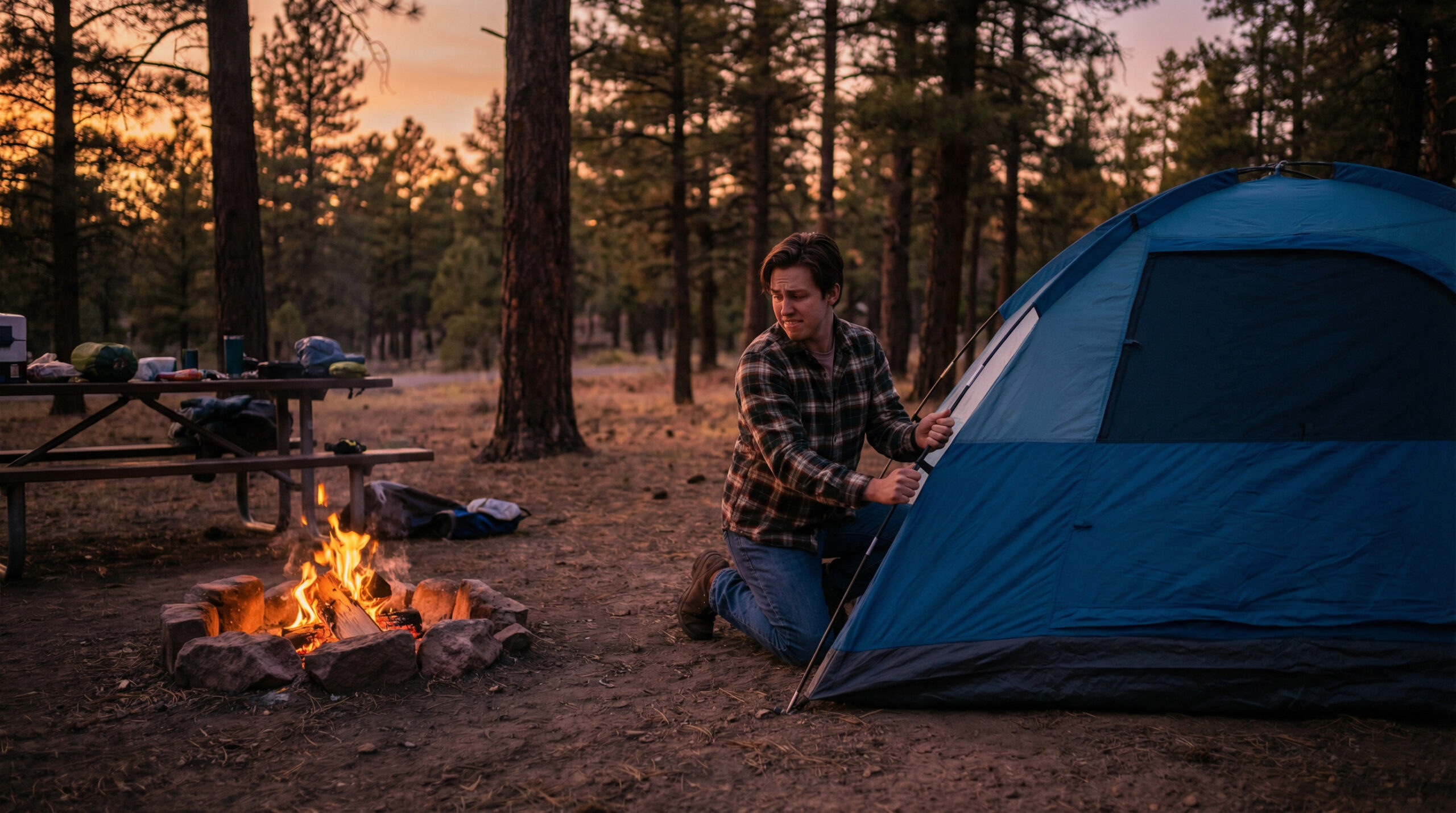
The cornerstone of camping for beginners is a durable, easy-to-pitch shelter. Always buy a tent rated for at least one or two people more than will actually sleep inside. A “two-person tent” fits two sleeping pads edge-to-edge with zero room for duffel bags, shoes, or elbow room. If you are camping as a couple, opt for a four-person tent. Look for a user-friendly 3-season camping tent featuring lightweight aluminum or fiberglass poles and a full-coverage rainfly. If you want to compare popular entry-level options, take a look at our roundup of the best tents for beginners.2. Cozy Sleep System
A bad night of sleep will ruin an otherwise great trip. Your sleep system consists of three parts: a sleeping bag, a sleeping pad, and a pillow. Do not skip the sleeping pad! The ground absorbs body heat directly out of you through conduction, so a thick insulated sleeping pad or air mattress is essential to stay warm and cushion your hips. When choosing a bag, make sure you learn how to choose a sleeping bag temperature rating that matches local night conditions, as temperatures drop rapidly after sunset.3. Dependable Lighting
Campgrounds get exceptionally dark once the sun sets beneath the tree line. Hands-free illumination is vital when preparing late meals or walking to the restroom. Pack an adjustable LED headlamp for every camper, alongside a central lantern for the picnic table. Avoid common camping lighting mistakes beginners make, such as relying entirely on your smartphone flashlight, which quickly drains your battery and leaves your hands tied up.Step 3: Test Your Gear at Home First
Never unpack a brand-new tent or stove at the campsite for the very first time as dusk settles. Conducting a backyard practice session is a game-changer when learning camping for beginners. Set up your tent in your yard or a local park on a clear afternoon. Unroll the rainfly, stake out the guy lines, and practice zipping the doors. This trial run reveals missing stakes, tricky pole clips, or damaged seams while you still have full daylight and high-speed internet to watch tutorial videos. If space allows, sleep out in the backyard for one night. Testing your sleeping pad and sleeping bag at home builds confidence and proves whether your gear setup keeps you warm and comfortable. While you are testing shelter, practice lighting your kitchen gear too. If you plan to cook over a single-burner camp stove, fire it up on a outdoor picnic table at home, boil a pot of water, and learn how the flame adjuster controls heat level.
Step 4: Keep Outdoor Meals Simple and Stress-Free
Cooking outdoors is deeply satisfying, but complicated multi-course recipes lead to heavy coolers, mountain-sized dish stacks, and unnecessary frustration. Keeping food prep simple keeps camping for beginners stress-free and rewarding. For your first night, prepare your food at home. Chop vegetables, marinate meats, or freeze pre-cooked meals like chili or pasta sauce in leak-proof containers. At the campsite, all you have to do is heat up your prepared ingredients in a single pot. Bring plenty of non-perishable snacks like trail mix, granola bars, and fruit so nobody gets hungry while waiting for the camp stove to heat up.“Plan meals that require only one pot or pan to clean afterward. Washing dishes in dark campsite sinks becomes an exhausting chore very quickly.”Always keep food safety top of mind. Store food and scented items inside a hard-sided cooler in your locked vehicle trunk when you are not actively eating. This prevents local wildlife—ranging from clever raccoons and squirrels to black bears—from raiding your campsite.
Step 5: Master Camp Etiquette and Leave No Trace
Respecting basic outdoor rules ensures that you, your campsite neighbors, and future visitors enjoy the woods equally. Following standard outdoor guidelines and respecting quiet hours helps keep camping for beginners positive for both you and neighboring campers.- Observe quiet hours: Most state and national campgrounds enforce quiet hours between 10:00 PM and 6:00 AM. Keep voices low, turn off portable speakers, and dim high-powered lights.
- Keep fires contained: Only burn firewood purchased locally near the campground to avoid transporting destructive invasive insects. Extinguish your campfire completely with water—dousing coals until they are cool to the touch—before going to sleep or leaving the site.
- Pack out all trash: Leave your campsite cleaner than you found it. Pick up tiny micro-trash like twist ties, snack wrappers, and fruit peels.
- Respect campsite boundaries: Never walk directly through another camper’s rented site to reach the bathroom or water spigot; stick strictly to marked roads and trails.
Basic First Aid and Safety Essentials for Beginners
Even the most straightforward camping trip can throw a few curveballs your way. A small, well‑organized first‑aid kit, a reliable fire‑starter, and a clear emergency plan let you stay calm and keep the focus on the outdoors.
- First‑aid kit – Pack a lightweight kit with bandages, antiseptic wipes, blister treatment, and a small bottle of pain reliever. First aid kit searches show options that fit in a daypack.
- Fire starter – A wind‑proof tinder bundle or waterproof matches keep you warm and help signal for help. Fire starter searches help you find a compact solution.
- Whistle and flashlight – A whistle is a simple, loud way to attract attention; a headlamp or lantern keeps you safe after dark.
- Map, compass, and a GPS app – Even if you stay in a well‑marked camp, knowing your bearings prevents getting lost.
- Water purification tablets – In case you need to source water, tablets or a small filter can keep you hydrated.
Take a few minutes before you leave to practice applying a bandage or striking a fire. Knowing how to use each item reduces panic if an incident occurs, letting you enjoy the night under the stars with confidence.