
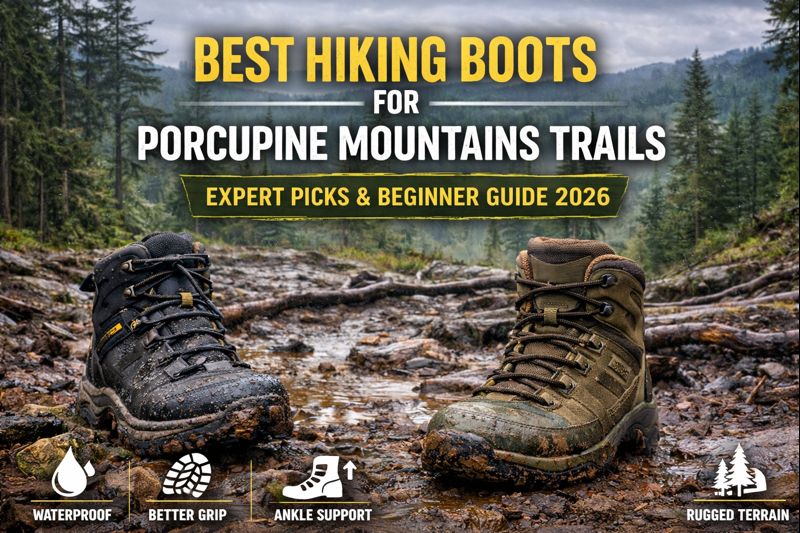
Best hiking Boots for Porcupine Mountains Trails: Expert Picks (Beginner Guide 2026)
Introduction
The Porcupine Mountains Wilderness State Park doesn’t politely introduce itself. It grabs you by the ankles.
The first time I hiked there, it had rained the night before. It wasn’t a torrential downpour, but it was enough to submerge everything. The trail looked innocent. Five minutes later, my boots were sliding on roots like butter on a hot pan, and my socks were already questioning my life choices.
That’s why choosing the best hiking boots for Porcupine Mountains trails isn’t about brand loyalty or Instagram aesthetics. It’s about staying upright, dry, and comfortable on muddy Lake Superior trails, rocky ridgelines, slick boardwalks, and long, root-choked forest paths.
This is a beginner-friendly, no-BS 2026 guide—written for real hikers, not gear collectors. I’ll walk you through what works, what doesn’t, and which boots are worth your money if you’re planning to hike the Porkies.
Why Porcupine Mountains Trails Destroy Bad Boots
Before we talk recommendations, you need context.
What makes the Porkies different
-
Constant moisture (rain, mist, dew, runoff)
-
Thick exposed roots that act like greased pipes
-
Sharp basalt and sandstone rock
-
Long elevation changes that punish weak ankle support
-
Remote trails where foot pain turns into trip-ending pain
If a boot fails here, it fails fast.
Common beginner mistakes I see every season
-
Buying “water-resistant” boots (not waterproof)
-
Choosing Trail Runners with no rock protection
-
Going ultralight without considering pack weight
-
Ignoring ankle support on multi-day hikes
This guide exists to save you from those mistakes and help you pick the best hiking boots for Porcupine Mountains trails that actually work.
What to Look for in Hiking Boots for Porcupine Mountains
-
Waterproofing that actually works
If the boot doesn’t use GORE-TEX or an equivalent sealed membrane, skip it. Morning dew alone will soak mesh boots. Add creek crossings and rain, and it’s game over. -
Aggressive outsole grip (this matters more than comfort)
Look for Vibram Megagrip, Contagrip, or deep multi-directional lugs. Flat soles slide here. Period. -
Midsole stiffness for rocks and roots
A soft boot feels appealing at REI. It feels terrible after six hours of stepping on roots. Moderate stiffness is ideal, especially if carrying a pack. -
Ankle support (yes, even for beginners)
Porcupine Mountains trails twist your feet. A mid- or high boot reduces fatigue and missteps, especially on muddy descents.
These are the features that make the best hiking boots for Porcupine Mountains trails stand out.
Best Hiking Boots for Porcupine Mountains Trails (Expert Picks)
1) Salomon Quest 4 GTX — Best Overall for Porky’s Terrain
Use case: Long day hikes or multi-day backpacking trips with wet ground.
Why it works: Built for terrain like the Porkies. The ADV-C chassis stabilizes your foot, and the Contagrip outsole bites firmly into mud and roots.
Trade-off: Stiffer than casual hikers expect; takes a few hikes to break in.
Who it’s for: Beginners who want confidence and support. Not for ultralight minimalists.
2) Merrell Moab 3 Mid Waterproof — Best Beginner-Friendly Option
Use cases: Short to moderate hikes, first-time visits, lighter packs.
Why it works: The shoes offer comfort out of the box, a wide toe box, and decent waterproofing. Forgiving of non-athletic foot shapes.
Trade-off: Outsole grip is adequate, not elite. Care is needed for slick roots.
Who it’s for: Beginners prioritizing comfort. Not for heavy-pack backpackers.
3) Lowa Renegade GTX Mid — Best for All-Day Comfort
Use case: Long mileage days on mixed terrain.
Why it works: The PU midsole absorbs shock better than most boots in this class. Feet feel less beat up after Rocky Ridge walks.
Trade-off: Not the grippiest outsole in deep mud.
Who it’s for: Comfort-focused hikers. Not for sloppy post-rain conditions every day.
4) Keen Targhee III Waterproof — Best Wide-Foot Boot
Use case: Hikers with wide feet tackling muddy trails.
Why it works: A roomy toe box + strong toe protection reduces stubbed toes on rocky sections.
Trade-off: Heavier than it looks.
Who it’s for: Wide-foot hikers. Not for speed hikers.
5) La Sportiva Nucleo High II GTX — Best Balance of Light + Support
Use case: Fast-paced hikes with variable terrain.
Why it works: Lightweight feel without sacrificing stability. Breathable yet waterproof.
Trade-off: Narrow fit.
Who it’s for: Athletic hikers with narrow feet. Not for wide-foot beginners.
Hiking Boots vs Trail Runners in the Porkies
Trail runners can work on dry summer days with light packs. But for most beginners, boots win here.
Why boots are safer in Porcupine Mountains:
-
Better protection from sharp roots
-
More stability on muddy slopes
-
Warmer and drier in unpredictable weather
-
Reduced foot fatigue on long days
If you’re asking the question, you probably want the best hiking boots for Porcupine Mountains trails, not a runner.
What Most People Miss (This Matters)
Break-in matters more than brand
A $300 boot with zero break-in will ruin your hike faster than a cheaper boot that fits perfectly.
I always do:
-
2 short neighborhood walks
-
1 stair-heavy walk
-
1 muddy local trail, if possible
Before stepping into the Porkies.
Socks can make or break everything
-
Merino wool socks = fewer blisters, better moisture control
-
Cotton socks = pain
No exceptions.
Mini Personal Story: The Root That Taught Me Respect
There’s a stretch near the Escarpment Trail where roots cross the path like ladders.
I observed an individual in lightweight sneakers slip, spin, and fall abruptly—dismissing it with laughter but evidently unsettled. His shoes were soaked. He turned back.
I didn’t. Not because I’m tougher. Because my boots held. That’s the difference the best hiking boots for Porcupine Mountains trails make.
Ethical CTA (No Pressure)
If you’re planning a Porcupine Mountains hike this season, don’t gamble on footwear. Start with the best hiking boots for Porcupine Mountains trails, and your trip instantly gets better.
Comfort buys confidence. Confidence buys enjoyment.
FAQs: Long-Tail Questions Hikers Actually Ask
-
Are hiking boots necessary for the Porcupine Mountains?
Yes, this is especially true for beginners and in wet conditions. -
Can beginners hike Porcupine Mountains trails safely?
Absolutely—with proper boots and pacing. -
Are waterproof boots required in the Porkies?
Strongly recommended due to frequent moisture. -
Best hiking boots for muddy forest trails?
Boots with deep lugs and waterproof membranes. -
Are trail runners okay in the Porcupine Mountains?
Only for experienced hikers in dry weather. -
Do I need ankle support in the Porkies?
Yes, especially on root-heavy trails. -
What are the best boots for Porcupine Mountains backpacking?
Salomon Quest 4 GTX or similar supportive boots. -
How slippery are the Porcupine Mountains trails?
Very slippery after rain. -
What are the best boots for the Lake of the Clouds hike?
Waterproof mid or high boots with grip. -
Are heavy boots bad for long hikes?
Not if they fit well and support your stride. -
What outsole works best on wet roots?
Vibram or Contagrip rubber. -
How long should I break in boots before hiking?
At least 1–2 weeks. -
Are wide boots available for the Porkies?
Yes—Keen and Merrell work well. -
What’s the best beginner boot for Michigan trails?
Merrell Moab 3 Mid Waterproof. -
Can bad boots ruin a Porcupine Mountains trip?
Easily. Foot pain compounds fast.