Table of Contents
This post contains Amazon affiliate links.
First Aid Kits for Hoh Rainforest Hikes: Safety Essentials
The Hoh Rainforest looks calm, almost gentle.
Towering trees, soft moss, quiet trails, constant mist.
But that calm hides real risk.
Wet ground, cold air, limited cell service, and long stretches without help mean small injuries can turn serious fast. That’s why First Aid Kits for Hoh Rainforest Hikes aren’t optional gear—they’re part of basic trail safety.
This guide breaks things down simply.
What you actually need.
What most beginners forget.
And how to prepare for the kind of problems that happen out there, not in theory.
No hype. Just practical trail logic.
Also Read: First aid kits for Hoh Rainforest hikes
Why First Aid Kits Matter More in the Hoh Rainforest
On dry desert trails, you worry about heat.
In alpine terrain, exposure.
In the Hoh Rainforest, the challenge is constant moisture and isolation.
Here’s what makes this environment different:
Trails stay wet year-round
Slippery roots and wooden bridges
Cool temperatures even in summer
Slow evacuation if something goes wrong
A scraped knee that stays wet can get infected.
A blister ignored for two miles becomes a limp for ten.
That’s why First Aid Kits for Hoh Rainforest Hikes should focus less on “emergency trauma” and more on injury prevention and moisture control.
Common Beginner Mistake I’ve Seen on These Trails
I once met a couple near Five Mile Island.
One hiker had a heel blister wrapped in a paper towel and duct tape.
Why?
Their first aid kit was “back at the car.”
Rain had soaked their socks.
The blister broke.
They still had miles to go.
This is the kind of slow problem that ruins hikes in the Hoh—not dramatic injuries, just small issues ignored too long.
What a Good First Aid Kit for Rainforest Hiking Actually Does
A proper kit should help you:
Treat minor injuries immediately
Keep wounds dry in constant moisture
Manage foot problems early
Handle mild cold exposure
Buy time until you can hike out safely
It’s less about heroics and more about staying functional.
That’s the mindset behind First Aid Kits for Hoh Rainforest Hikes.
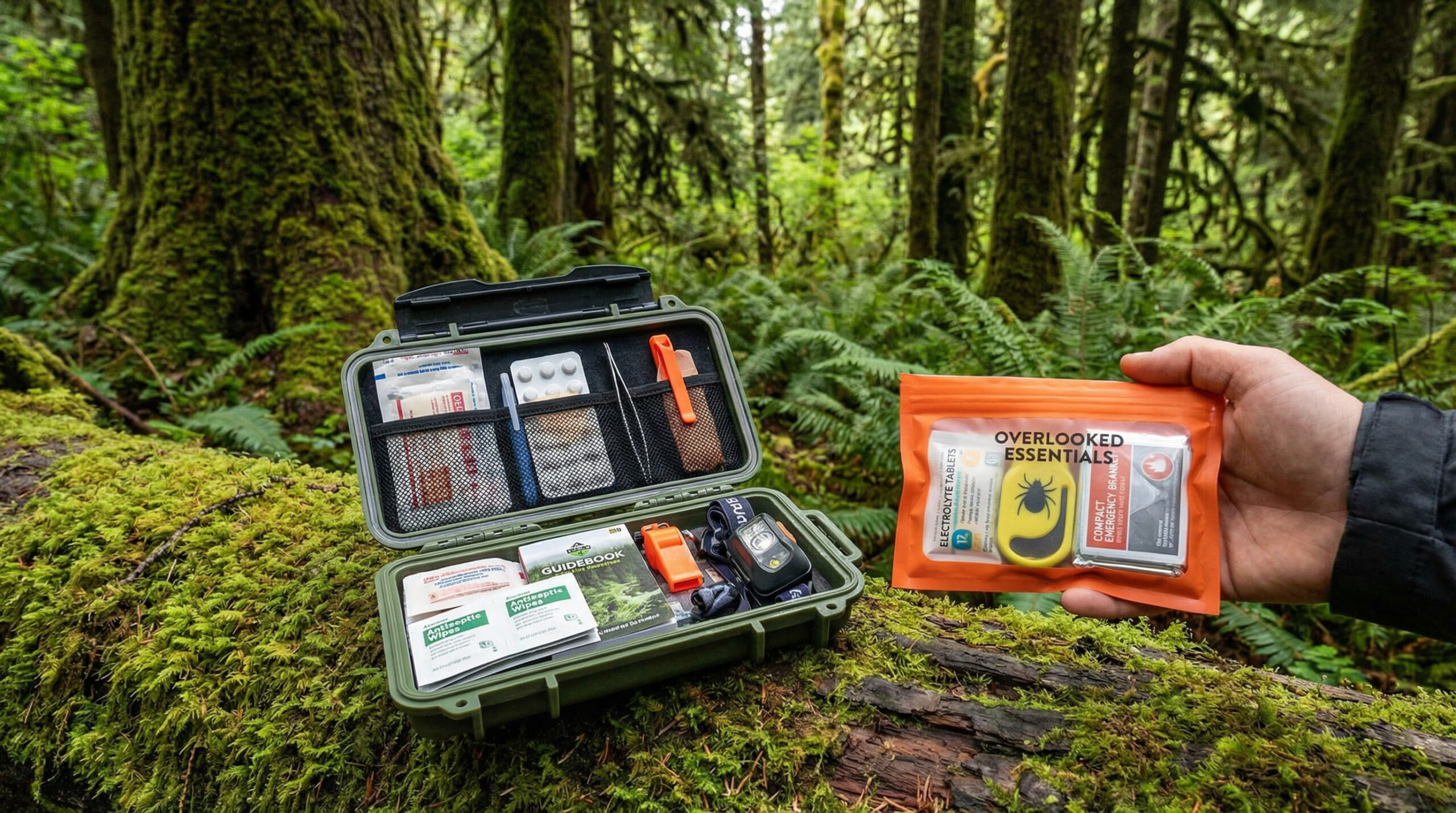
Core Components You Should Never Skip
Blister Care (Non-Negotiable)
Wet boots + long mileage = blisters.
Include:
Moleskin or blister pads
Leukotape or similar strong tape
Alcohol wipes (for cleaning before taping)
Treat hotspots early. Waiting is the mistake.
Waterproof Wound Care
Regular bandages fail fast in the Hoh.
Look for:
Waterproof adhesive bandages
Sterile gauze pads
Medical tape that sticks when damp
Moisture control is everything here.
Antiseptic and Infection Prevention
Cuts don’t dry out in rainforests.
Carry:
Antiseptic wipes
Antibiotic ointment packets
Use them even on small scrapes.
Pain, Swelling, and Minor Illness
Simple meds go a long way:
Ibuprofen or acetaminophen
Antihistamine (for reactions or bites)
Cold rain + fatigue makes aches feel worse than usual.
Cold and Wet Exposure Support
Hypothermia doesn’t require snow.
Add:
Emergency heat pack
Compact emergency blanket
Rain + rest stops = rapid chilling.
Items People Bring That Rarely Help Here
Some kits look impressive but miss the point.
Often unnecessary:
Large trauma shears
CPR masks for short hikes
Excessive gauze rolls
The Hoh rewards compact, practical kits, not bulky ones.
How Big Should Your Kit Be?
For most day hikes in the Hoh:
About the size of a large wallet or small pouch
Under 8–10 ounces
Easily reachable in your pack
If it’s buried deep, you won’t use it soon enough.
Also Read: Camping->Sleeping Bags for Camping Hikes: A Reliable, Trail-Tested Guide (2026)
Adjusting Your Kit for Trip Length
Short Day Hikes
Focus on:
Blisters
Minor cuts
Pain relief
Longer or Remote Routes
Add:
Extra bandages
Backup blister care
More antiseptic
Small roll of cohesive wrap
The farther you go, the more self-reliant you must be.
Rainforest-Specific Packing Tips
These details matter more than brand names:
Keep your kit in a waterproof pouch
Double-bag meds in zip bags
Replace items yearly—humidity degrades supplies
Practice using tape and blister pads at home
Preparation beats improvisation.
Also Read: Compact Survival Kits for Backpacking (2026): Smart, Lightweight Choices
How First Aid Fits Into Overall Hoh Rainforest Safety
Your kit works best alongside:
Proper Footwear
Extra dry socks
Rain layers
Conservative mileage planning
First Aid Kits for Hoh Rainforest Hikes aren’t standalone solutions—they’re part of a system.
Signs You Should Stop and Treat Immediately
Don’t push through these:
Hotspots on feet
Small cuts that keep reopening
Persistent shivering
Dizziness or unusual fatigue
Stopping early prevents long walk-outs later.
Final Thoughts: Simple, Thoughtful, Ready
The Hoh Rainforest doesn’t demand extreme gear.
It demands attention.
A smart first aid kit:
Fits the environment
Addresses realistic problems
Gets used early, not late
That’s the real value of well-planned First Aid Kits for Hoh Rainforest Hikes—they keep minor issues minor, so the forest stays something you enjoy, not endure.
Also Read: Sleeping Bags for Camping Hikes: A Reliable, Trail-Tested Guide (2026)
FAQs
1. Do I really need a first aid kit for short Hoh Rainforest hikes?
Yes. Wet conditions make even short hikes risky for blisters and cuts.
2. What’s the most important item in First Aid Kits for Hoh Rainforest Hikes?
Blister care. Foot issues end more hikes here than injuries.
3. Are pre-made kits enough for this environment?
Only if you customize them for moisture and foot care.
4. How do I keep bandages dry in constant rain?
Use waterproof pouches and waterproof adhesive bandages.
5. Is hypothermia a real concern in the Hoh Rainforest?
Yes. Cool temperatures and rain can chill hikers quickly.
6. Should I carry antiseptic even for small cuts?
Absolutely. Infections happen faster in damp conditions.
7. How often should I replace items in my kit?
At least once a year, or after any wet trip.
8. Can I share one kit with a hiking partner?
It’s better if each person carries basic blister and wound care.
9. Are emergency blankets useful in the rainforest?
Yes, especially during rest stops or unexpected delays.
10. What’s a common beginner mistake with first aid kits here?
Leaving the kit in the car or packing items they don’t know how to use.
11. Does trail distance matter when choosing a kit?
Longer, more remote hikes require more supplies and redundancy.
12. What’s the best mindset for rainforest first aid?
Treat early, stay dry, and don’t rush problems.
Author Bio
Outdoor gear expert.
Pro-Tip
Refresh quarterly.
🔗 Related Articles
- Compact Survival Kits for Backpacking (2026): Smart, Survival Gear
- Powerful What to Put in a Day Hike Survival Kit (Minimal & Lightweight): 9 Tips for 2026 First Aid
- Best Survival First Aid Kits for Solo Hikers Reviewed: 9 Picks for 2026 Buying Guides
- Essential Hiking Blister Treatment: How to Treat a Blister on the Trail: First Aid for Hikers: 9 Tips for 2026 Buying Guides
- Essential Emergency Supplies for Hikers (2026): Smart, Safe Survival Gear
- 👉 Essential Camping Accessories Guide for Beginners & Families: 10 Picks for 2026 Accessories