As an Amazon Associate, PrimeTrailGear earns from qualifying purchases made through links on this page, at no extra cost to you.
Last updated:
Table of Contents
This post contains Amazon affiliate links.
Top Survival Knives Every Camper Needs
Survival Knives for Camping Guide 2026—If you’re new to camping, selecting the appropriate blade can significantly impact your outdoor experience.
I discovered this through personal experience.
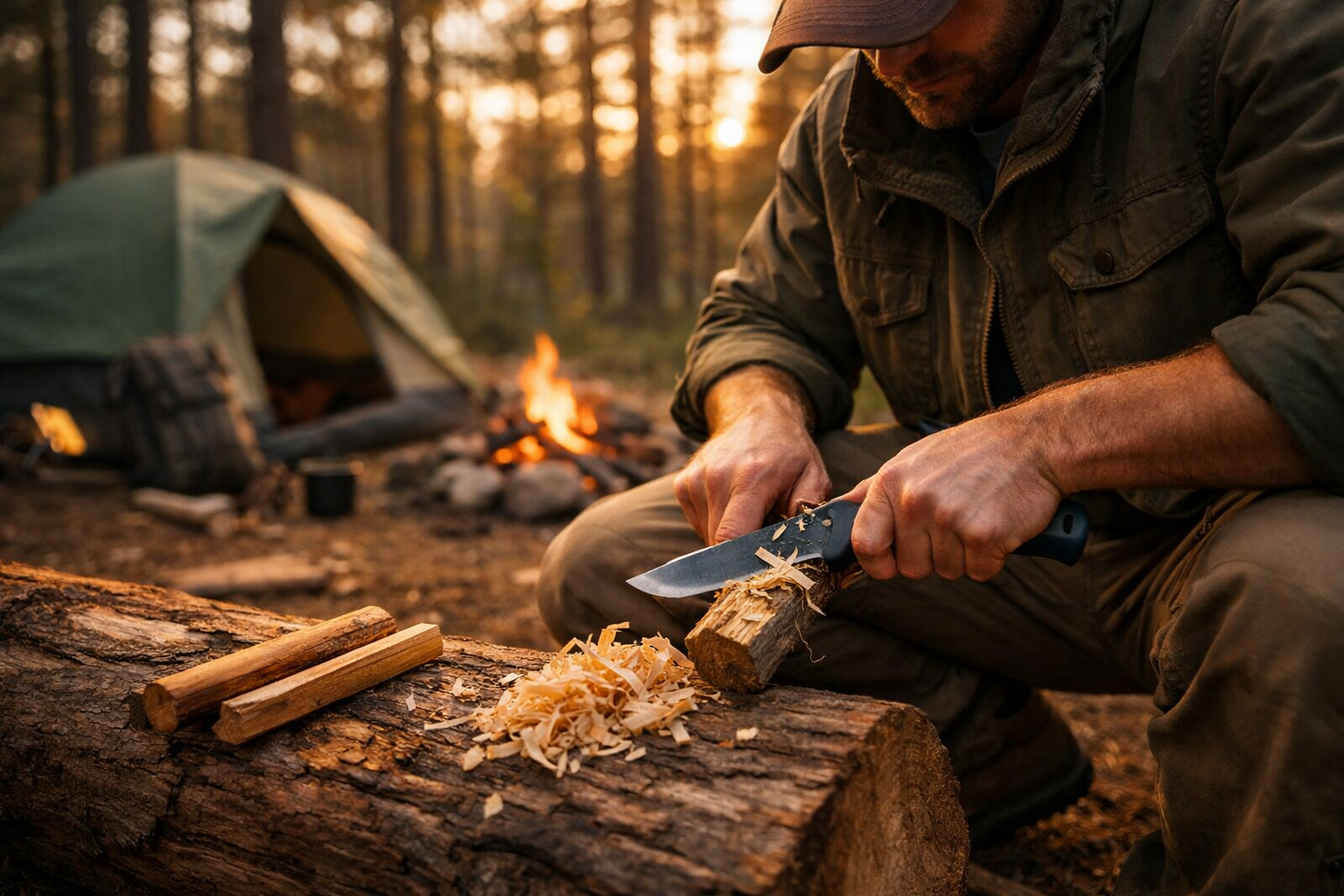
On one early trip, I packed what I thought was a “good enough” knife. By nightfall, the wind picked up, the firewood was damp, and my cheap blade couldn’t split kindling without slipping.
That moment taught me something every beginner eventually realizes:
A survival knife isn’t about toughness.
It’s about reliability when things get inconvenient.
And camping is full of inconvenient moments.
Survival Knives for Camping Guide 2026: Hiking Shoes vs. Trail Runners. Beginners Need the Right Blade
For beginner campers, the right survival knife for camping solves everyday problems:
-
Preparing firewood
-
Cutting cordage
-
Food prep
-
Emergency fixes
-
Shelter adjustments
-
Gear repairs
Most people search for the best survival knife for camping beginners, believing that a larger knife is better.
It’s not.
The best knife is
-
Comfortable
-
Durable
-
Easy to control
-
Simple to maintain
Fixed Blade vs. Folding—What Beginners Should Choose
In this Survival Knives for Camping Guide 2026, one thing stands clear:
Beginners should start with fixed blades.
Why?
Folding knives:
-
Get dirt inside the hinges
-
Loosen over time
-
They are harder to clean in the field
Fixed-blade survival knives are
✔ Stronger
✔ Simpler
✔ More reliable
And when your hands are cold or worn out—simple matters.
Also Read: Best Multi-tools for Camping
Best Survival Knives for Camping Beginners
These are tools that actually perform in real outdoor conditions.
KA-BAR Becker BK2 — Heavy-Duty Reliability
Built by KA-BAR
Use case: Splitting wood and rough camp work
Trade-off: Heavy for long hikes
Best for: Campers needing durability
Not for: Ultralight setups
Morakniv Companion — Beginner Favorite
From Morakniv
Use case: Food prep and light carving
Trade-off: Not for heavy batoning
Best for: Weekend campers
Not for: Extreme bushcraft
Gerber StrongArm—Balanced Performance
Made by Gerber Gear
Use case: Emergency and general survival
Trade-off: Needs sharpening more often
Best for: All-around use
Not for: Precision carving
Also Read: Must-Have Camping Gadgets 2026
Benchmade Bushcrafter — Premium Upgrade
Crafted by Benchmade
Use case: Long wilderness trips
Trade-off: Higher price
Best for: Serious campers
Not for: Budget buyers
ESEE 4 — Dependable Field Knife
From ESEE Knives
Use case: Bushcraft and survival readiness
Trade-off: Needs maintenance
Best for: Long-term outdoor use
Not for: Low-care users
Blade Size — What Actually Works
According to this Survival Knives for Camping Guide 2026, beginners should aim for the following:
👉 4–6 inches
This range gives:
-
Control
-
Versatility
-
Safety
Too short = limited tasks
Too long = hard to handle
Also Read: Best Survival Gear for Outdoor Emergencies: Beginner Guide 2026
What Most Beginners Miss
Everyone talks about:
-
Blade steel
-
Brand names
-
Coatings
But ignore:
👉 Handle comfort
During long carving sessions, poor grip leads to the following:
-
Hand fatigue
-
Slipping
-
Blisters
Choose:
✔ Textured grip
✔ Finger guard
✔ Balanced weight
Real Camp Moment
This is precisely why the Survival Knives for Camping Guide 2026 matters.
On one trip, a tent stake snapped on rocky ground.
The wind is rising.
Rain coming.
With a sturdy fixed blade, we carved a new stake in minutes.
Without it?
That night would’ve been miserable.
Beginner Mistakes to Avoid
❌ Buying tactical-looking knives
❌ Choosing the cheapest option
❌ Ignoring sheath quality
Knife Maintenance Basics
-
Clean after use
-
Dry fully
-
Oil lightly
-
Sharpen regularly
Final Thoughts
Following this Survival Knives for Camping Guide 2026, remember the following:
The best survival knife isn’t the biggest.
It’s the one that works when you need it.
Choosing wisely now means fewer problems later.
FAQs
1. What is the best survival knife for beginners?
A fixed blade around 4–5 inches offers balance and ease of use.
2. Are expensive survival knives worth it?
Sometimes. Beginners benefit more from usability than premium steel.
3. Can a survival knife replace a hatchet?
For small tasks like kindling, yes.
4. What blade shape is best for camping?
Drop-point blades offer versatility.
5. Is carbon steel better than stainless?
Carbon sharpens more easily but needs care.
6. Do beginners need full-tang knives?
Yes, for durability.
7. How often should I sharpen it?
Light touch-ups after trips work well.
8. What’s the safest knife size?
4–6 inches.
9. Should I carry a backup knife?
A small folder is helpful.
10. Are serrated edges useful?
Not for general camping.
11. How do I store my knife?
Dry and lightly oiled.
12. Is batoning safe?
With proper technique, yes.
13. Do survival knives rust?
Carbon steel can rust if neglected.
14. Should beginners carry a multi-tool instead?
A survival knife handles tougher tasks.
15. Can one knife do everything?
Almost—if chosen wisely.
Pro-Tip
Refresh quarterly.
🔗 Related Articles
- Powerful What to Put in a Day Hike Survival Kit (Minimal & Lightweight): 9 Tips for 2026 First Aid
- Compact Knives for Outdoor Adventures: Beginner Guide 2026 Survival Gear
- 7 Best Survival Knives Under $50 That Won't Let You Down Buying Guides
- Easy Survival Skills Hiking: 10 Survival Skills Every Hiker Should Know Before Going Off-Trail Buying Guides
- Best Multi-tools for Camping: 7 Smart Survival Picks Survival Gear
- Privacy Shelters Camping: Best Privacy Shelters for Camping: 9 Picks for 2026 Camping Deals