Best Camping Tents Under $200: Beginner Guide (2026)
Search
Elevate Your Aspirations
As an Amazon Associate I earn from qualifying purchases.Finding reliable camping tents under $200 used to feel like a gamble between flimsy plastic poles and leaked seams during midnight downpours. Camping gear technology has advanced rapidly, bringing high-end waterproofing coatings, durable aluminum or reinforced fiberglass frames, and intuitive setup systems into the reach of budget-conscious outdoor enthusiasts. You do not need to spend half a paycheck to stay dry, warm, and comfortable under the stars.Whether you are planning weekend car camping trips with family or taking your first steps into overnight trail adventures, setting realistic expectations around price and performance is critical. Spending between $100 and $200 hits the exact sweet spot where affordability meets long-term durability. In this guide, we break down what specifications actually matter, how to pick the right capacity for your style, and how to avoid the common buying traps that lead to soggy sleeping bags.
What to Expect in the $200 Price Range
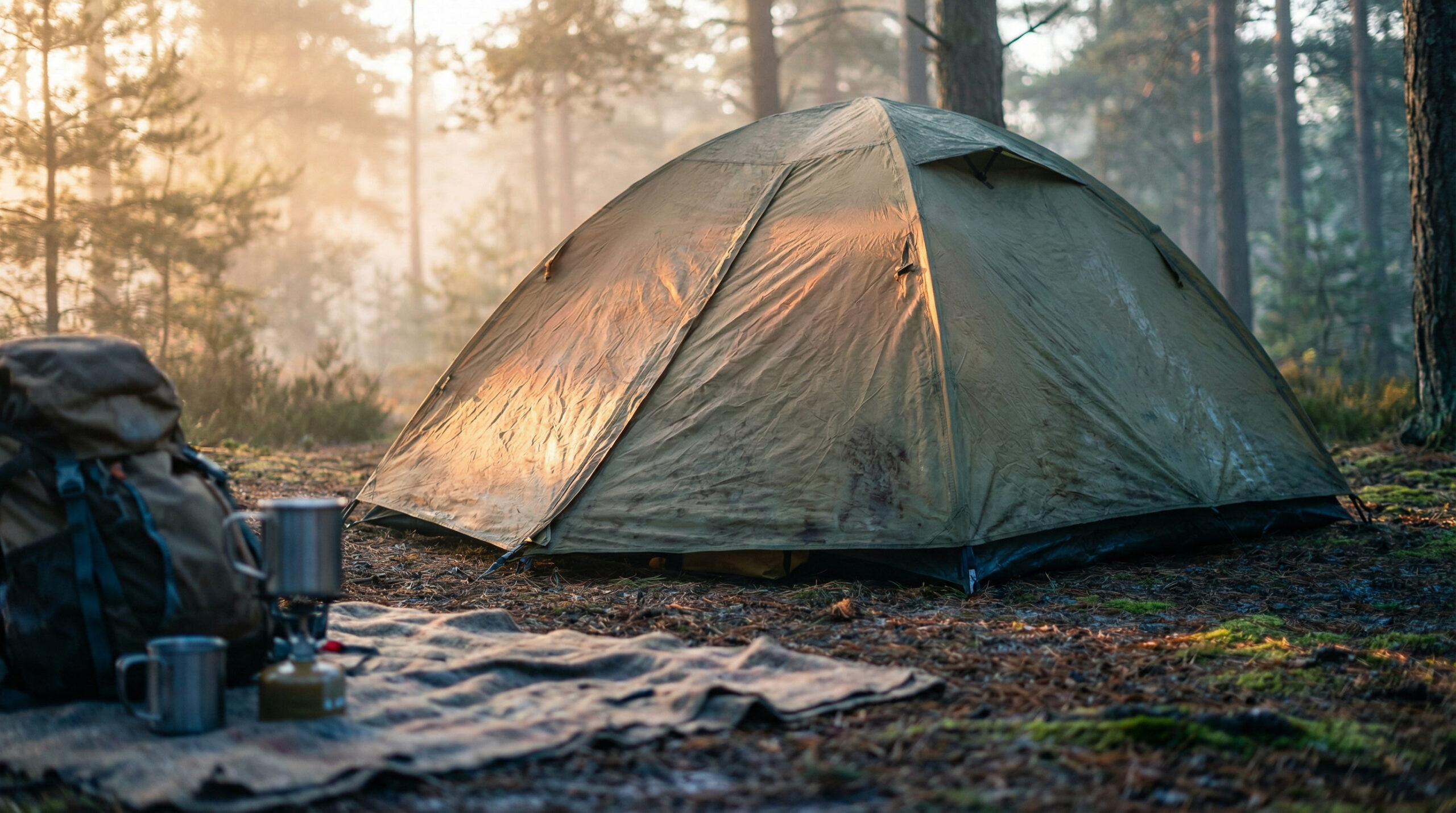
Stepping into the sub-$200 tent market puts you well past disposable discount-store shelters. Today, manufacturers crafting camping tents under $200 have elevated their manufacturing standards. You can reliably expect fully waterproof polyurethane coatings, inverted floor seams designed to keep ground moisture out, and sturdy pole architecture engineered to handle moderate wind gusts.In this price tier, materials are tailored primarily for durability and user friendliness rather than extreme ultra-lightweight performance. Fabric weights generally range around 68-denier to 75-denier polyester, which provides excellent tear resistance at the cost of a few extra ounces. That makes a standard 4-person dome tent perfectly suited for drive-up campsites where gear weight is secondary to interior volume and ease of setup.Waterproofing is another area where modern budget gear shines. Look for fabric hydrostatic head ratings—a measure of how much water pressure fabric can resist before leaking—between 1,200mm and 3,000mm. Combined with factory-taped seams, shelters in this category will keep you completely dry through normal summer storms and sustained seasonal rainfall.Photo by duncantran on Pixabay
Choosing the Right Tent Style for Your Adventure
Not every tent under $200 serves the same purpose. Choosing the right design depends heavily on how far you plan to carry your equipment from your trunk to your campsite.
Dome Tents
The classic dome design remains the undisputed king of versatile shelters. Featuring two main crisscrossing poles, dome shelters slice through wind exceptionally well and naturally shed rain. They offer balanced headroom and are exceptionally easy to pitch solo. If you are comparing top entry-level brand models, take a look at our direct comparison on tents for beginners to see how classic dome frames stack up in real-world testing.
Cabin Tents
If standing upright to change clothes is non-negotiable, a cabin-style layout is your best match. Built with near-vertical walls and massive ceiling heights, cabin shelters deliver impressive roominess. While an instant cabin tent offers setup in under two minutes using pre-attached poles, keep in mind that vertical walls catch more wind than sloped domes. They are ideal for calm weather and spacious family car camping.
Backpacking Tents
Hikers intending to carry their shelter miles into the backcountry should seek out specialized trail designs. While slightly smaller inside, a designated lightweight backpacking tent trims unnecessary weight by utilizing thinner fabrics and streamlined pole structures, typically keeping packed weight under 6 pounds without exceeding your budget.
Key Features to Look For in Camping Tents Under $200
When inspecting feature sheets, marketing terms can get confusing fast. Focus on these critical structural components when evaluating camping tents under $200 to guarantee you receive the best real-world performance for your money:
Full-Coverage Rainfly vs. Partial Rainfly: A full-coverage fly extends all the way to the ground, creating a protective barrier against driving wind and rain while forming useful exterior storage spaces called vestibules. Partial flies cover only the roof cap, leaving lower walls vulnerable during blowing storms.
Bathtub Floor Design: Look for floor material that extends several inches up the sides of the tent body before sewing into the wall fabric. This elevated seam design prevents pooled groundwater from seeping through lower edges.
Ventilation Mesh: To prevent interior condensation from dripping onto your face at night, ensure the shelter features large upper mesh panels and low-level ground vents to encourage continuous airflow.
Color-Coded Hardware: Standardized clips and color-matched pole sleeves eliminate guesswork, allowing fast setups even when arriving at your campsite after dusk.
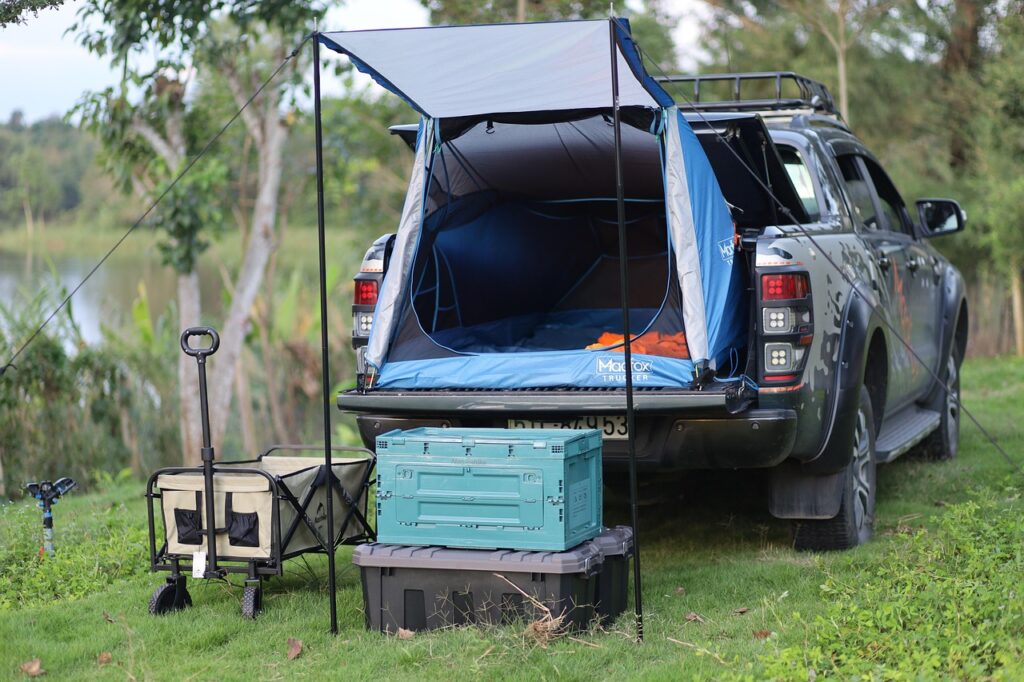
While gathering your main shelter, remember to account for small campsite necessities. Pairing your setup with essential camping accessories under $30 ensures you have stakes, seam sealant, and lantern gear ready without stretching your gear budget.Photo by congerdesign on Pixabay
Sizing Secrets: Don’t Get Tricked by “Person” Ratings
One of the most frequent missteps entry-level campers make is taking tent capacity ratings literally. In the outdoor industry, a “2-person tent” means two adults sleeping shoulder-to-shoulder in mummy sleeping bags with zero room left over for duffel bags, boots, or elbow room.To keep your trip comfortable, always apply the simple “Plus Two” rule for car camping:
Solo Campers: Choose a 2-person shelter to leave room for your pack, shoes, and comfortable movement.
Two Campers: Opt for a 4-person design. This allows space for double-wide sleeping pads or gear storage along the walls.
Families or Groups of Four: Upgrade to a 6-person layout to fit inflatable mattresses, kids, and storage totes effortlessly.
Because most camping tents under $200 offer 6-person capacities at very reasonable weight penalties, stepping up one size class provides a massive improvement in interior comfort without blowing your spending limit.
Essential Setup and Maintenance Tips for Budget Shelters
Even the best budget-friendly gear requires proper care and pitch technique to maximize weather resistance and operational lifespan. Protecting camping tents under $200 comes down to solid routine practices during and after your trip.First, always place a protective barrier beneath your shelter floor. A custom-fit ground tarp or heavy-duty tent footprint shields the thin floor fabric against sharp gravel, sticks, and abrasion, drastically extending the life of your floor’s waterproof coating.
Proper stake placement and tensioning can make a budget shelter perform like a four-season mountain rig, while a sloppy pitch will leak regardless of tent cost.
Always pull all guy lines taut and anchor them securely into firm soil. Stretching your rainfly taut over camping tents under $200 prevents water from pooling in fabric sags and ensures condensation drains off exterior walls rather than soaking through mesh interior panels.If bad weather hits unexpectedly on your trip, review our guide on how to set up a tent in the rain without getting soaked to keep your living space bone dry during setup. Furthermore, keeping warm isn’t just about wind protection; understand how to choose a sleeping bag temperature rating so your entire sleep system matches the ambient nighttime weather.
FAQ
Can camping tents under $200 handle heavy rain and storm conditions?
Yes, provided they feature taped factory seams, a rainfly with a minimum 1200mm waterproof coating, and properly guyed-out stake lines. Taking time to stake out every guy line keeps the waterproof rainfly separated from the inner tent mesh, preventing rain transfer.
What size tent should I buy for two people?
A 4-person tent is ideal for two adults. A 2-person model will technically fit two sleeping pads side-by-side, but a 4-person capacity leaves generous extra space for backpacks, footwear, and comfortable changing.
Are instant pop-up tents a good choice for beginners?
Instant tents offer lightning-fast setup using pre-attached telescoping poles. However, they are generally heavier, bulkier when packed into a vehicle trunk, and slightly less aerodynamic in high wind gusts compared to traditional aluminum or fiberglass dome designs.
Final Thoughts: Quality Camping on a Budget
Building an enjoyable outdoor setup doesn’t require high-end expedition budgets. Choosing reliable camping tents under $200 gives you the perfect balance of weather protection, user-friendly features, and durable construction to explore state parks and backcountry campgrounds confidently. Focus on solid waterproofing specs, generous interior volume, and proper ground protection, and you will enjoy comfortable wilderness nights for seasons to come.