As an Amazon Associate, PrimeTrailGear earns from qualifying purchases made through links on this page, at no extra cost to you.
Last updated:
Best Camera Mounts for hiking and Biking (Real-World Tested, No Fluff)
Let’s be honest for a second.
Everyone gets excited about the camera.
Nobody thinks about the mount.
Until you’re halfway up a trail, breathing like a broken accordion, trying to hold a camera steady with one hand while not face-planting into rocks. Or bombing down a bike trail with footage so shaky it looks like a horror movie found-footage scene.
That’s when you realize something important:
Choosing the best camera mounts for hiking and biking matters more than the camera itself.
I learned that the hard way. More than once.
And yeah… some clips will never see daylight again.
This guide is for real hikers and bikers in the U.S. who want:
-
hands-free filming
-
stable footage
-
gear that doesn’t annoy you after 10 minutes
No hype. No influencer nonsense. Just mounts that actually work.
FTC Disclosure
Some links below are Amazon affiliate links. If you buy through them, I may earn a small commission—at no extra cost to you. I only recommend camera mounts I’d use myself or confidently suggest to a friend.
Why Camera Mounts Matter More Than You Think
Here’s the uncomfortable truth.
A $400 Action Camera on a bad mount = unusable footage.
A $200 camera on a solid mount = clean, watchable memories.
The best camera mounts for hiking and biking solve three problems:
-
Stability (no nausea-inducing shake)
-
Comfort (you forget it’s there)
-
Safety (for you and your gear)
If a mount shifts, digs into your chest, or makes you stop every few minutes… you’ll stop using it. Period.
Types of Camera Mounts (Quick Reality Check)
Before buying anything, you need to know what kind of filming you’re doing.
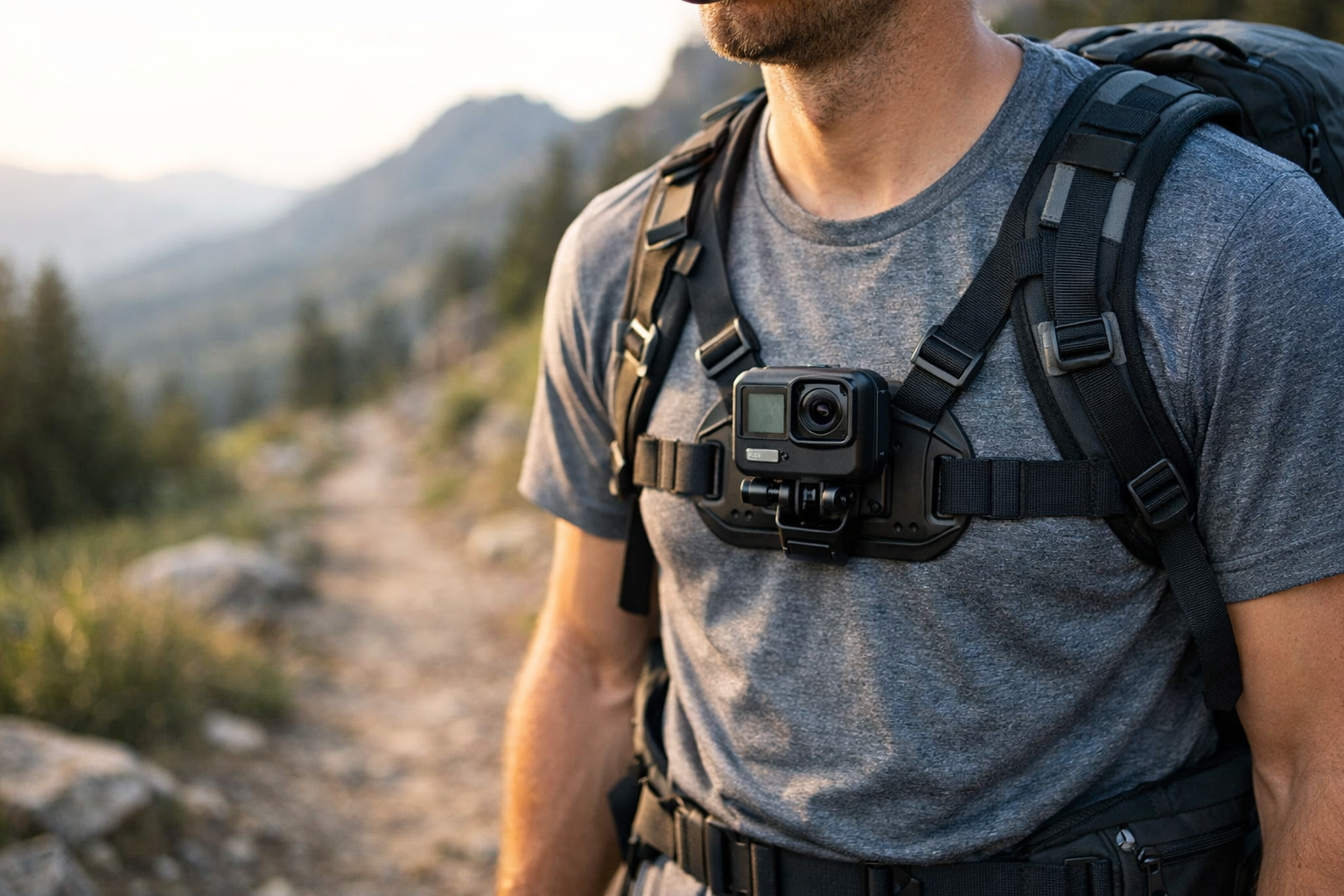
Chest Mounts
-
Most immersive POV
-
Shows hands, handlebars, terrain
-
Excellent for hiking and trail biking
Helmet Mounts
-
Dynamic angle
-
Best for biking
-
Can cause neck fatigue on long rides
Handlebar Mounts
-
Stable and predictable
-
Great for cycling
-
Less exciting POV
Backpack Strap Mounts
-
Lightweight and fast access
-
Ideal for hiking
-
Less cinematic, more practical
Now let’s talk about the mounts that actually deserve your money.
Also Read: Best Camera Bags for Action Cameras 2026
1. GoPro Chesty (Official Chest Mount)
If you’ve ever watched a smooth hiking POV on YouTube, odds are it was filmed with this.
The GoPro Chesty is boring in the best way possible. It doesn’t slide. It doesn’t loosen. It doesn’t slowly strangle you uphill.
It just works.
For anyone serious about finding the best camera mounts for hiking and biking, this is usually the first recommendation—and for good reason.
What It’s Like to Use
You strap it on, adjust once, and forget about it. The footage feels natural. Stable. Watchable.
Pros
-
Rock-solid stability
-
Excellent POV
-
Comfortable for long hikes
Cons
-
Not subtle (you’ll look like a gear nerd)
-
Chest sweat is… real
Best For
Hikers, backpackers, trail bikers, POV filming.
👉 Check the GoPro Chesty chest mount on Amazon
2. Ulanzi Backpack Strap Camera Mount (Quiet Overachiever)
This one doesn’t get enough love.
The Ulanzi backpack strap mount clips directly onto your pack strap and lets you mount or remove your camera in seconds. No harness. No bulk.
For casual hikers looking for practical camera mounts for hiking and biking, this thing is a sleeper hit.
Why People End Up Loving It
-
Fast access
-
Lightweight
-
Zero chest pressure
Pros
-
Extremely comfortable
-
Quick release
-
Minimal setup
Cons
-
Less immersive POV
-
Not ideal for aggressive biking
Best For
Day hikers, travel vloggers, relaxed trail filming.
👉 See the Ulanzi backpack strap camera mount
3. GoPro Helmet Front + Side Mount
Helmet mounts are divisive.
Some riders swear by them.
Others hate the neck strain.
For biking, though—especially mountain biking—helmet mounts earn their place among the best camera mounts for hiking and biking (mostly biking).
Real Experience
The footage feels fast and alive. But after long rides, you’ll feel the weight.
Pros
-
Dynamic biking POV
-
Secure adhesive
-
Multiple mounting positions
Cons
-
Neck fatigue over time
-
Not great for hiking
Best For
Mountain bikers, downhill riders, trail shredders.
👉 Browse helmet camera mounts on Amazon
4. GUB Aluminum Bike Handlebar Camera Mount
If you want simple, predictable footage, handlebar mounts are underrated.
The GUB aluminum handlebar mount is metal—not plastic—and clamps down tight. It doesn’t wobble itself loose halfway through a ride.
Not cinematic. But reliable.
Pros
-
Solid aluminum build
-
Easy installation
-
Stable angle
Cons
-
Less immersive
-
Vibrations on rough trails
Best For
Cyclists, bikepackers, commuters.
👉 See the GUB handlebar camera mount
How to Choose the Best Camera Mounts for Hiking and Biking
Here’s the simple rule:
-
Long hikes → chest or backpack strap
-
Aggressive biking → helmet
-
Long rides → handlebar
When comparing the best camera mounts for hiking and biking, comfort beats everything. A mount that annoys you will never get used.
Chest vs Helmet vs Handlebar (Quick Comparison)
| Mount Type | Best Use | Comfort | POV |
|---|---|---|---|
| Chest Mount | Hiking + Biking | High | Excellent |
| Helmet Mount | Biking | Medium | Dynamic |
| Handlebar Mount | Cycling | High | Stable |
| Backpack Strap | Hiking | Very High | Moderate |
Safety Note (Don’t Skip This)
No footage is worth:
-
blocking airflow
-
compromising helmet safety
-
distracting you on trails
Test your mount at home. Tighten everything. Don’t adjust mid-ride.
Final Verdict (Honest Take)
If I had to recommend just one?
For most people, the best camera mounts for hiking and biking are chest mounts—hands down.
They’re stable. Comfortable. And they capture what you actually experienced.
Everything else depends on how you move.
And trust me—when you rewatch that footage months later, you’ll be glad you chose comfort over gimmicks.
FAQs
Are chest mounts better than helmet mounts for hiking?
Yes. Chest mounts are more comfortable and stable for long hikes.
Can these mounts work with non-GoPro cameras?
Most support standard action camera adapters.
Do camera mounts affect biking balance?
Helmet mounts slightly; chest and handlebar mounts usually don’t.
Are backpack strap mounts secure enough?
Quality ones are very secure for hiking.
Which mount is best for beginners?
Chest mounts—easy and forgiving.
Are cheap mounts worth it?
Sometimes, but stability often suffers.
Do mounts work in rain?
Yes, as long as your camera is weather-rated.
Which mount gives the best POV footage?
Chest mounts for hiking, helmet mounts for biking.
🔗 Related Articles
- Best Action Camera Deals for Creators: 7 Things to Avoid Action Cameras
- Essential Action Camera Accessories: 15 Smart, Powerful Must-Haves Action Cameras
- Chest, Helmet & Handlebar Mounts Compared: 7 Brutally Honest Wins & Fails Action Cameras
- 7 Best Action Camera Bags 2026 | Durable & Tough Picks Action Cameras
- Best Action Camera for Hiking in 2026 (Reddit-Tested Picks Action Cameras
- Best Hiking Shoes for Flat Feet on Rocky Trails: 12 Picks for 2026 Boots & ShoesBest Hiking Water Storage Solutions: 7 Mistakes to AvoidBest Hiking Water Storage Solutions: 7 Mistakes to Avoid