As an Amazon Associate I earn from qualifying purchases.
Understanding survival gear pros and cons can save you money, weight, and frustration when you’re miles from help. Walk into any outdoor store and you’ll find walls of gadgets promising to keep you alive — waterproof fire starters, tactical pens, credit-card toolkits, paracord bracelets that claim to do everything but make coffee. The marketing makes it sound simple: buy the kit, stuff it in your pack, and you’re prepared. Reality doesn’t work that way.
Every piece of equipment you carry earns its spot or it doesn’t. The survival gear pros and cons calculation changes based on where you go, how long you stay, what skills you actually have, and whether you’re traveling solo or with a group. A ferro rod is brilliant in wet Pacific Northwest forests but overkill for a summer day hike in Arizona. A full trauma kit makes sense for a weeklong backcountry hunt; it’s dead weight on an overnight at a established campground. The goal isn’t to own the most gear — it’s to carry the right gear for your specific situation.
The Real Survival Gear Pros and Cons You’ll Face in the Field
Let’s start with the upside. Quality emergency equipment gives you options when things go sideways. A reliable water filtration system turns a questionable stream into drinkable water. A compact emergency shelter can prevent hypothermia if you’re forced to spend an unplanned night out. A good multi-tool handles gear repairs, food prep, and first-aid improvisation. These aren’t theoretical benefits — they’re proven solutions to common backcountry emergencies.
The downside gets less attention in product descriptions. Weight adds up fast. Ten ounces here, twelve there, and suddenly your ultralight pack weighs fifteen pounds. Complexity creates failure points. A multi-tool with twelve functions has twelve things that can jam, break, or confuse you under stress. Cost escalates quickly when you chase “the best” version of every category. And perhaps most dangerously, gear can create false confidence. Carrying a satellite messenger doesn’t replace route-finding skills. A top-tier first-aid kit doesn’t help if you don’t know how to stop arterial bleeding.
Our guide on hiking survival gear breaks down what experienced hikers actually carry versus what marketing suggests you need.
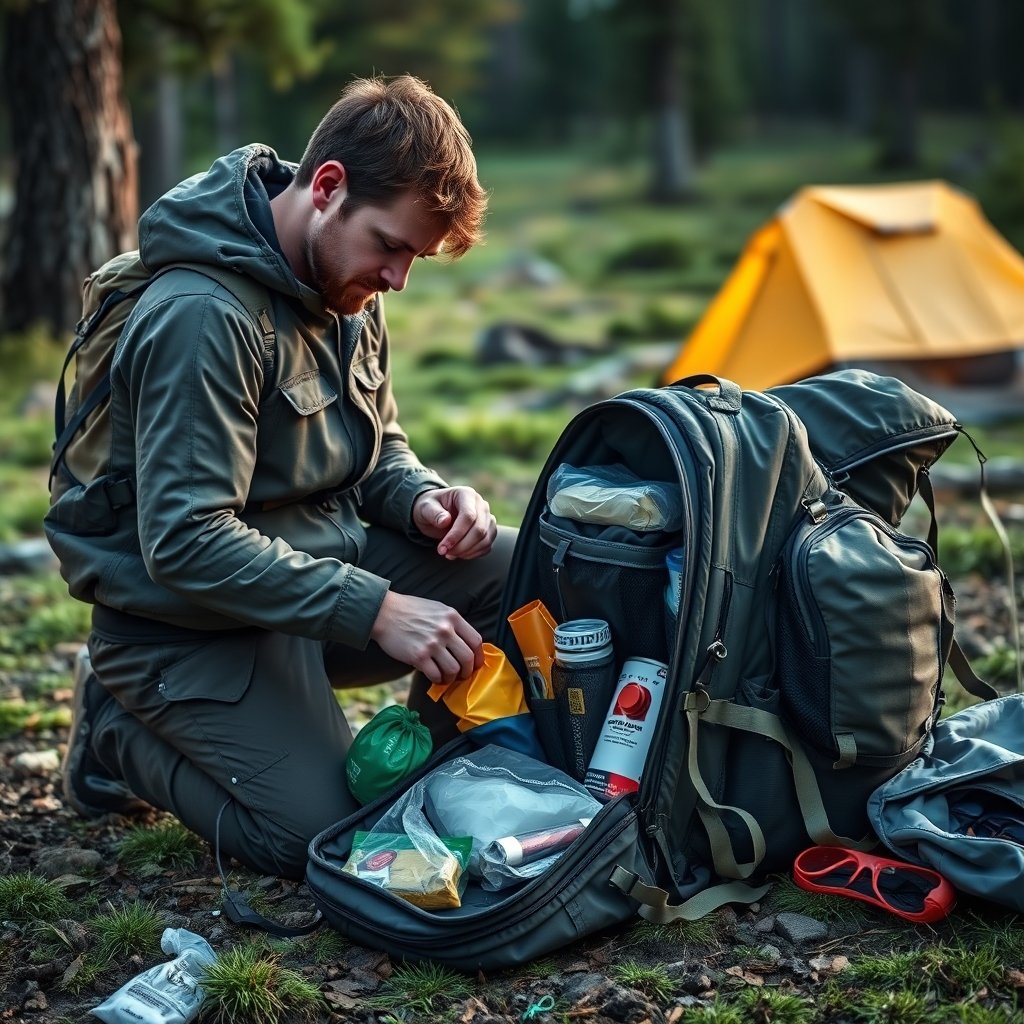
When More Gear Creates More Problems
Redundancy has a place in critical systems — two ways to start fire, two ways to signal — but redundancy for its own sake just bloats your pack. I’ve seen day hikers carry full-size axes, folding saws, and hatchets “just in case.” On a maintained trail with cell service, that’s not preparedness. That’s luggage.
The survival gear pros and cons conversation often ignores opportunity cost. Every dollar spent on a specialized gadget is a dollar not spent on training, better footwear, or a more reliable rain shell. Every cubic inch occupied by a rarely-used tool displaces food, water, or insulation. Decision fatigue is real too — the more options you carry, the longer it takes to choose the right one when you’re cold, tired, and losing light.
Specialized kits illustrate this perfectly. A dedicated “survival tin” with fishing hooks, snare wire, and a tiny compass sounds comprehensive. In practice, you’re unlikely to catch fish with a hook the size of a grain of rice, and snaring requires skill most people never practice. That tin’s space and weight would be better spent on a larger knife, more cordage, or extra calories.
The Non-Negotiables That Earn Their Weight
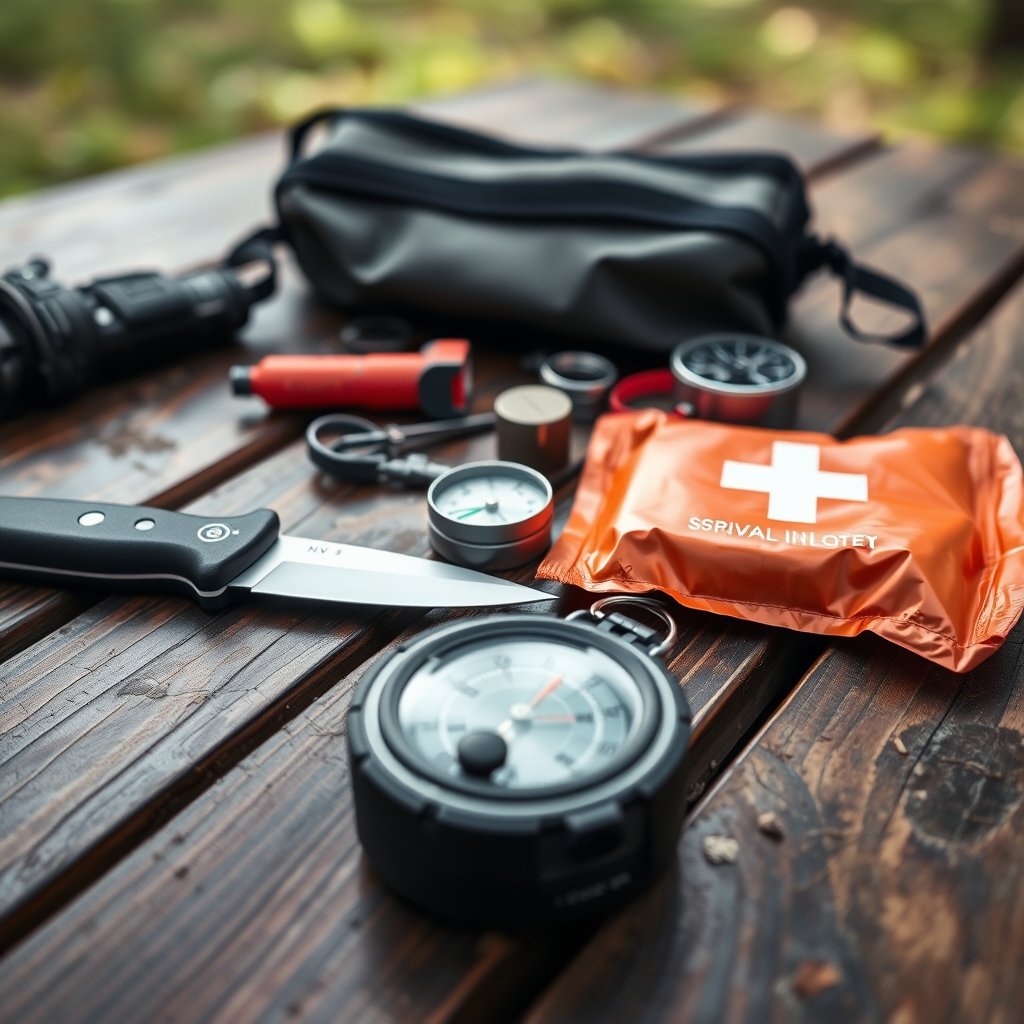
Certain categories consistently justify themselves across almost any scenario. Cutting tools top the list. A fixed-blade knife or sturdy folder handles food prep, gear repair, fire prep, and first aid. Fire starting comes next — carry at least two methods, one that works soaking wet. A ferro rod plus a mini Bic covers most bases for minimal weight.
Shelter and warmth rank third. An emergency bivy or blanket weighs three ounces and can keep you alive through an unexpected night. Signaling rounds out the core four. A whistle, signal mirror, and phone or satellite communicator give you layered communication options.
First aid deserves its own conversation. A minimal kit — tourniquet, pressure dressing, gauze, tape, antihistamine, pain reliever, blister treatment — handles the majority of backcountry medical issues. Expand based on group size, trip duration, and specific risks (snake country, allergy history, etc.). The best survival kits for beginners prioritize these fundamentals over gimmicks.
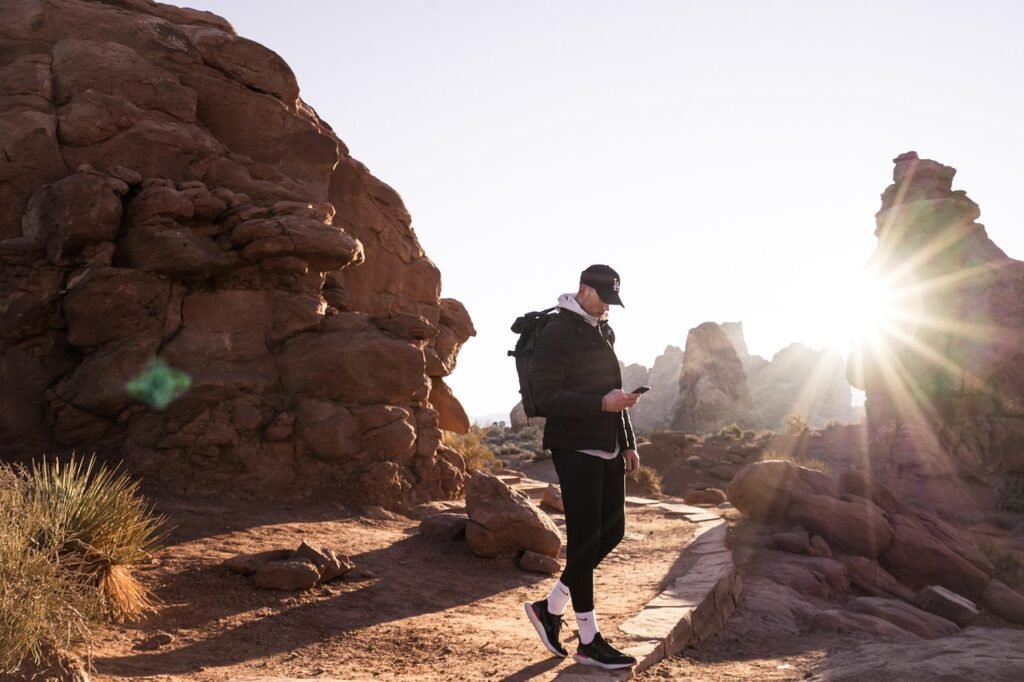
Building a Kit That Matches Your Actual Risks
Risk assessment beats gear lists every time. Ask yourself: What’s the most likely thing to go wrong on this specific trip? In desert environments, water capacity and sun protection dominate. In alpine zones, insulation and navigation take priority. Coastal kayakers need marine signaling and immersion protection. There’s no universal “best” kit — only the best kit for your context.
Season changes the math dramatically. Winter demands redundant insulation, robust fire systems, and avalanche gear in terrain that warrants it. Summer shifts focus to hydration, bug protection, and heat management. A kit built for July in Colorado will fail you in January in the same mountains. Modular systems let you swap components seasonally without rebuilding from scratch.
Group size matters too. Solo travelers need complete self-reliance. Groups can distribute critical items — one stove, one shelter, one comprehensive med kit — reducing individual load while maintaining capability. But every person still carries personal essentials: knife, fire, light, basic first aid, and enough water to reach the shared supply.
For lightweight approaches, see our lightweight camping gear roundup that balances minimal weight with real functionality.
Common Mistakes That Turn Assets Into Liabilities
Buying cheap versions of critical gear tops the mistake list. A $5 knife snaps when you baton firewood. A dollar-store ferro rod throws weak sparks. A bargain emergency blanket shreds unfolding it. These aren’t savings — they’re bets on your life against a few dollars. Buy once, cry once applies doubly to survival equipment.
Ignoring maintenance creates silent failures. Ferro rods corrode. Knives dull. Battery-powered devices discharge. Medical supplies expire. A quarterly gear check — test fire starters, sharpen blades, verify electronics, rotate meds — catches problems before you’re depending on them.
Overlooking skill development wastes even the best gear. I’ve watched people struggle to light a candle with a ferro rod they’d never struck. A tourniquet applied wrong causes more damage than no tourniquet. Practice in comfortable conditions so the motions are automatic when conditions aren’t.
Packing for fantasy scenarios instead of probable ones fills packs with dead weight. Unless you’re in genuine wilderness for weeks, you don’t need trapping supplies, extensive tool kits, or 500 feet of paracord. Be honest about where you’re actually going and what help is realistically available.
How to Test Before You Trust
Field-test every critical item before you need it. Strike your ferro rod until you can consistently light damp cotton balls. Set up your emergency shelter in your backyard during rain. Use your water filter on a muddy puddle. Apply your tourniquet on your own leg until you can do it one-handed in under thirty seconds.
Simulate realistic constraints. Try tasks with cold, wet hands. Work in fading light. Add time pressure. Gear that’s easy in a warm kitchen becomes impossible with numb fingers and rising panic. These sessions reveal design flaws — stiff buckles, confusing instructions, inadequate cordage — that spec sheets never mention.
Document what works and what doesn’t. A simple notebook entry — “Ferro rod worked great, striker uncomfortable after 20 strikes” — builds institutional knowledge faster than memory. Update your kit based on evidence, not marketing or wishful thinking.
Solo adventurers should review our best solo camping gear guide for tested recommendations tailored to single-person loads.
Final Thoughts on Building Your Kit
The survival gear pros and cons discussion ultimately comes down to honesty — about your skills, your destinations, your budget, and your willingness to practice. A modest kit you know inside out beats a premium collection you’ve never touched. Start with the core four: cutting tool, fire, shelter, signaling. Add medical supplies scaled to your training. Expand only when experience shows a genuine gap.
Resist the urge to solve every hypothetical problem with hardware. Knowledge weighs nothing. The ability to improvise shelter from a trash bag, signal with a CD, or purify water with sunlight and a plastic bottle often outperforms the specialized tool you left at home to save weight. Build competence first, then buy gear that extends what you can already do.
Your next step: pull everything out of your current kit. Handle each item. Ask “have I used this for real?” and “does this address my actual risks?” Put back only what passes both tests. Then go practice with what remains.
FAQ
How do I decide which survival gear is worth carrying?
Focus on items that address your most likely risks — shelter, water, signaling, and first aid — and skip anything that duplicates a function you already have covered.
Can I rely on a pre-made survival kit instead of building my own?
Pre-made kits work as a starting point, but they often include low-quality components or items you don’t need. Customizing lets you match gear to your environment and skill level.
What’s the biggest mistake people make with survival gear?
Buying equipment they never practice with. A tool you can’t use under stress becomes dead weight, no matter how highly rated it is.