
Updated for October 2026: a new section on "Keeping Your Lantern Clean and Ready for Every Trip" added.
As an Amazon Associate I earn from qualifying purchases.
Finding the best LED camping lanterns for your campsite can completely transform how your night unfolds after the sun dips below the tree line. There is nothing quite as frustrating as rummaging through a dark duffel bag for a lost headlamp or accidentally scorching dinner over a camp stove because you cannot see the pot. A reliable light source does not just illuminate your camp—it sets the mood, keeps your space safe, and makes evening chores effortless.
Outdoor lighting technology has advanced rapidly over the last few seasons. Modern camp lights are brighter, lighter, and far more energy-efficient than the heavy, fragile gas canisters and battery-guzzling monsters of the past. Whether you are car camping with the family or packing light for an backcountry trek, selecting modern LED camping lanterns with smart features like warm-spectrum dimming, USB-C fast charging, and weather-resistant housings is the ultimate upgrade for your trail kit.
Why Modern LED Technology Wins on the Trail
Old-school white-gas and propane lanterns had their charm, but they brought real risks: extreme heat, fragile glass globes, and fire hazards inside a tent vestibule. When evaluating LED camping lanterns, safety and convenience come standard. LEDs run cool to the touch, making them safe around children, pets, and flammable nylon tent walls.
Efficiency is another massive advantage. Solid-state diodes require a fraction of the energy that incandescent bulbs or fuel mantles consume. This efficiency translates into smaller battery packs and runtime that stretches across multi-day trips without a recharge. Plus, modern LEDs let you switch between cold white light for task work and warm amber tones for late-night relaxing around the picnic table. If you want to expand your off-grid energy options even further, pairing your setup with dedicated solar camping lights ensures you never run out of juice when you are miles away from the grid.

Key Features to Look For in LED Camping Lanterns
Not all camp lights are built equal. Before adding new gear to your tub, consider how you spend your time in the outdoors. The ideal choice depends heavily on your group size, pack weight limits, and power preferences.
Lumen Output and Beam Diffusion
Brightness is measured in lumens, but higher numbers do not always mean better performance. A raw 1,000-lumen glare can blind your campmates if the globe lacks proper light diffusion. For soft tent lighting, 50 to 150 lumens is plenty. For cooking dinner or playing card games at a picnic table, aim for 200 to 500 lumens. If you need to flood an entire group area with light, look for high-capacity ultra-bright campsite lanterns with milky or frosted globes that spread light evenly without harsh glares.
Power Sources and Dual-Fuel Versatility
Rechargeable lithium-ion batteries are now the industry standard. They eliminate the constant expense of disposable alkaline batteries and allow many models to double as power banks to top off your smartphone or GPS watch. However, if you are heading deep into the woods for a week, consider dual-fuel systems. Some of the most versatile LED camping lanterns allow you to swap in standard AA batteries if your internal battery drains before you reach a charger.
Weather Resistance and Durability
Campsite gear takes a beating. Look for high-impact polycarbonate frames and rubberized endcaps that absorb drops onto hard granite or dirt. Moisture resistance is equally critical. Check the ingress protection (IP) rating: an IPX4 rating handles splash resistance and light rain, while IPX6 or higher guarantees protection against torrential downpours.
Top Categories of LED Camping Lanterns for 2026
To help you narrow down your search, we have categorized the market into four main lighting styles based on real-world use cases.
1. Basecamp Powerhouses
If you prefer drive-up campsites, maximum illumination and extended battery life are top priorities. Basecamp lanterns feature massive internal lithium batteries, often exceeding 10,000 mAh. They deliver bright, clear lighting across large areas for dozens of hours on low settings. Many of these top-tier rechargeable LED camping lanterns feature multiple USB output ports, letting you charge phone batteries and action cameras while keeping the kitchen area brightly lit.
2. Ultralight Backpacking Lanterns
Weight and pack volume matter most when carrying everything on your back. Traditional lanterns are too bulky for a backpacking haul, but modern designs solve this with clever collapsible bellows and featherlight builds. Utilizing soft silicone diffusers, these collapsible backpacking lanterns compress down to the size of a hockey puck and weigh just a few ounces. They clip easily into the top gear loop of your shelter for effortless reading before sleep.
3. Ambient Warm-Glow Lanterns
Harsh white light can ruin the serene atmosphere of a wilderness evening. Recognizing this, gear designers now emphasize color temperature. Lanterns with “candle flicker” modes or warm 2700K color temperatures create a cozy, inviting ambiance similar to a traditional campfire. Placing a couple of warm-glow ambient lanterns around your sitting area keeps bugs at bay while creating a relaxed campsite vibe.
4. Emergency and Solar-Hybrid Lanterns
For budget-conscious campers and emergency preparedness kits, solar-hybrid designs offer incredible value. These compact units feature built-in solar panels on top, continuously topping off their internal reserves during sunny daytime hours. They are ideal back-ups during extended power outages at home or long overland trips where outlet charging is scarce.
Smart Campsite Lighting Etiquette and Hacks
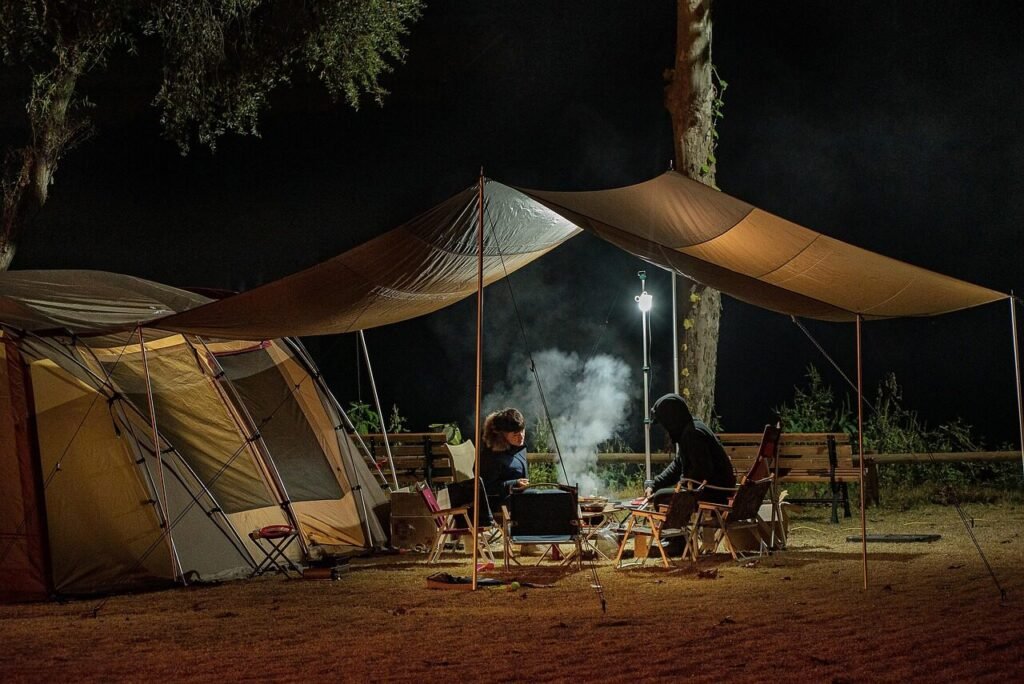
Having brilliant lighting at your disposal is great, but using it thoughtfully makes camp better for everyone nearby. One of the most frequent camping lighting mistakes beginners make is hanging high-lumen lights at eye level, which casts blinding glares directly at neighboring pitches.
To optimize your setup:
- Hang lights high: Suspend your lantern from a high tree branch or tarp ridgeline facing downward to create a broad downlight effect.
- Use red light modes: Switch to red illumination during late-night bathroom trips to preserve night vision and avoid waking tent mates.
- Diffused bounce light: Aim bright directional lights against the inside wall of a light-colored tarp or shelter to cast soft, ambient light over your living space.
Building out a functional lighting setup does not require spending a fortune, either. You can easily find high-value camping accessories under $30 that punch far above their weight class in build quality and runtime. Adding a few versatile lights and essential outdoor products under $25 to your storage bin ensures you stay prepared for any dark trail condition.
Keeping Your Lantern Clean and Ready for Every Trip
Before you set off, give your lantern a quick wipe-down. A microfiber cloth with a splash of mild soap and warm water will remove most dirt without damaging the seals. For stubborn grime, a cotton swab dipped in isopropyl alcohol works wonders on the diffuser and the LED bulb itself. Always leave the battery compartment dry before reassembling—any moisture inside can short out the circuitry or corrode contacts.
If your model has a removable diffuser, take it out, rinse it with a gentle tap of water, and pat it dry with a towel. Avoid submerging the entire unit; only small, detachable parts should get wet. After cleaning, check that all screws are tight and that the weather‑proof seals are intact. When you return from a trip, inspect the battery pack for any swelling or leaks; replace it immediately if you spot any damage.
Store the lantern in a dry, cool place—ideally a zip‑lock bag or a dedicated gear pouch—to keep dust and moisture at bay. A well‑maintained lantern will run brighter, last longer, and keep your campsite safe. For more gear wisdom, see our Best Multi‑tools for Camping guide and Essential Camping Gear for Beginners.
FAQ
Frequently Asked Questions
How many lumens do I need in a camping lantern?
For general campsite tasks like cooking or socializing, 200 to 400 lumens is ideal. For lighting an entire multi-family campsite, look for 800 or more lumens, while 50 to 100 lumens is plenty inside a small tent.
Are rechargeable LED lanterns better than battery-powered ones?
Rechargeable lanterns save money over time and often double as power banks for charging devices. However, dual-fuel models that accept both lithium batteries and standard AA or AAA batteries offer the best backup peace of mind off-grid.
What waterproof rating should an outdoor camping lantern have?
Look for an IPX4 rating at a minimum, which protects against splashing water and light rain. For severe weather or paddling trips, an IPX6 or IPX7 rated lantern provides complete water submersion protection.
Final Thoughts: Illuminate Your Next Adventure
Investing in reliable LED camping lanterns ensures that bad weather or early sunsets never cut your outdoor enjoyment short. From heavy-duty basecamp powerhouses that run all weekend to packable solar lights that take up virtually zero space, today’s options make outdoor lighting simpler and more dependable than ever.
Take time to audit your current lighting setup before your next trip. Pick a model with warm color settings, reliable weather sealing, and the battery type that fits your travel style. Once your lighting is dialed in, you can spend less time struggling in the dark and more time enjoying clear night skies around the campfire.
Read also: LED Camping Lanterns Guide 2026: Smart Picks for Every Trail